

Learning how to identify antique furniture helps collectors avoid expensive mistakes while also revealing the real craftsmanship hidden within older pieces. Although reproduction furniture often looks convincing at first glance, genuine antique furniture usually leaves behind clear clues involving construction, timber, wear and workmanship. Because of this, experienced collectors rarely rely on appearance alone when assessing age and authenticity.
Some antique furniture carries obvious age, while other pieces require much closer inspection. Therefore, understanding how to identify antique furniture becomes one of the most useful skills any collector can develop. In fact, many small details reveal far more than decorative style alone.
If you enjoy browsing historic interiors and decorative antiques, you may also enjoy exploring our antiques and collectables collection, where new pieces regularly arrive from house clearances and private collections.
Quick Answer: How Can You Identify Antique Furniture?
To identify antique furniture, examine several clues together rather than relying on appearance alone. Look at drawer joints, screws and fixings, natural wear, patina, timber and hidden construction. Hand-cut dovetails, period hardware, appropriate woods and genuine wear can all support an older date, while the underside, backs and drawer interiors often reveal more than polished surfaces. Most importantly, no single feature proves age — the strongest identification comes when several independent clues agree.
Why Learning to Identify Furniture Matters
Many reproduction pieces now carry age themselves, which means confusion between genuine antiques and later copies happens regularly. However, once collectors understand how to identify antique furniture properly, the differences often become surprisingly clear.
A Victorian-style reproduction made thirty years ago may still look attractive. Nevertheless, it does not carry the same historical interest, workmanship or collector appeal as genuinely period furniture.
Fortunately, authentic antique furniture usually reveals itself through construction methods, wear patterns and hidden details.
Period style can also help narrow down a date, particularly once you begin comparing proportions, timber, decoration and hardware. Our guide to Victorian vs Edwardian furniture takes a closer look at the practical differences between the two periods, including woods, inlay, legs, castors and construction.
1. How to Identify Antique Furniture Through Drawer Joints
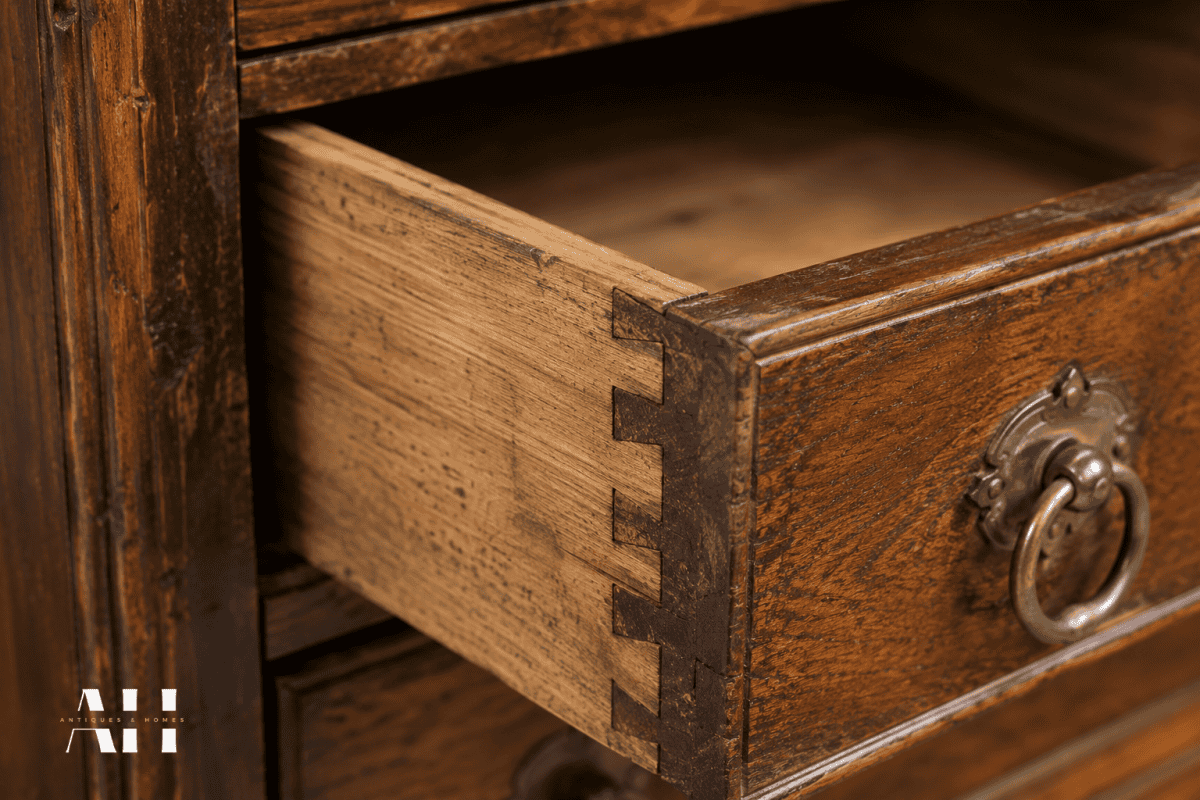
Collectors often begin by inspecting dovetail joints inside drawers because these joints frequently reveal the age of antique furniture very quickly.
Earlier handmade dovetails usually appear slightly uneven. The spacing varies naturally because craftsmen cut each section individually by hand. Modern machine-made joints, by contrast, normally appear perfectly identical.
Therefore, if every joint looks mathematically precise, the piece may prove newer than expected.
Older furniture also tends to show tiny imperfections that modern production methods usually eliminate entirely. Ironically, these imperfections often help confirm authenticity.
Hand-cut dovetail joints often reveal the age and craftsmanship of genuine antique furniture.
2. How to ID. Old Furniture Using Screws and Fixings
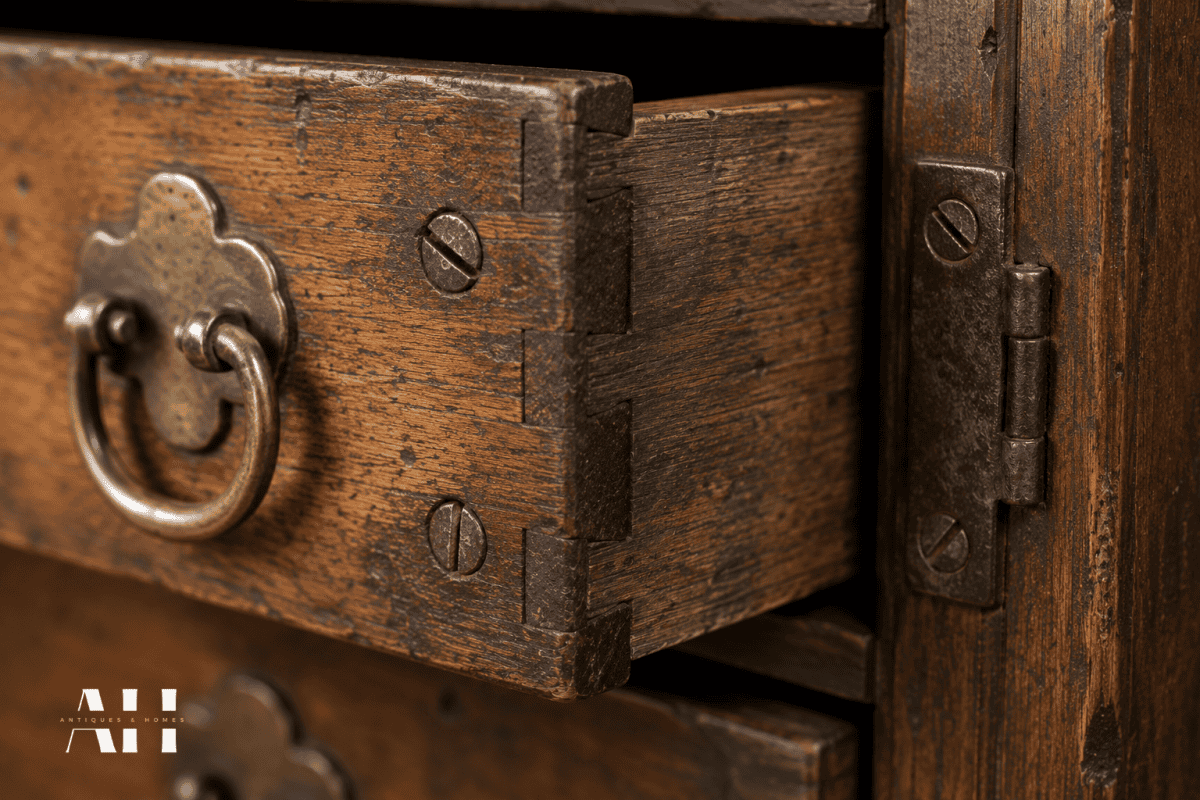
Screws provide another excellent clue when learning how to identify antique furniture.
Early handmade screws often display uneven threads and slightly irregular slots. Meanwhile, modern screws usually appear perfectly uniform because machines produce them to exact measurements.
Collectors therefore inspect hinges, drawer handles and internal fittings carefully when assessing authenticity.
Of course, screws alone do not prove age because many antique pieces received repairs over decades of use. However, original early screws can strongly support other signs of authenticity.
If you enjoy learning about historic materials and decorative metalwork, our guide on how to tell the difference between brass and bronze explains how collectors identify traditional antique metals.
Original screws, hinges and traditional fixings often help collectors identify genuine antique furniture.
3. How to Identify Antique Furniture Through Patina and Wear
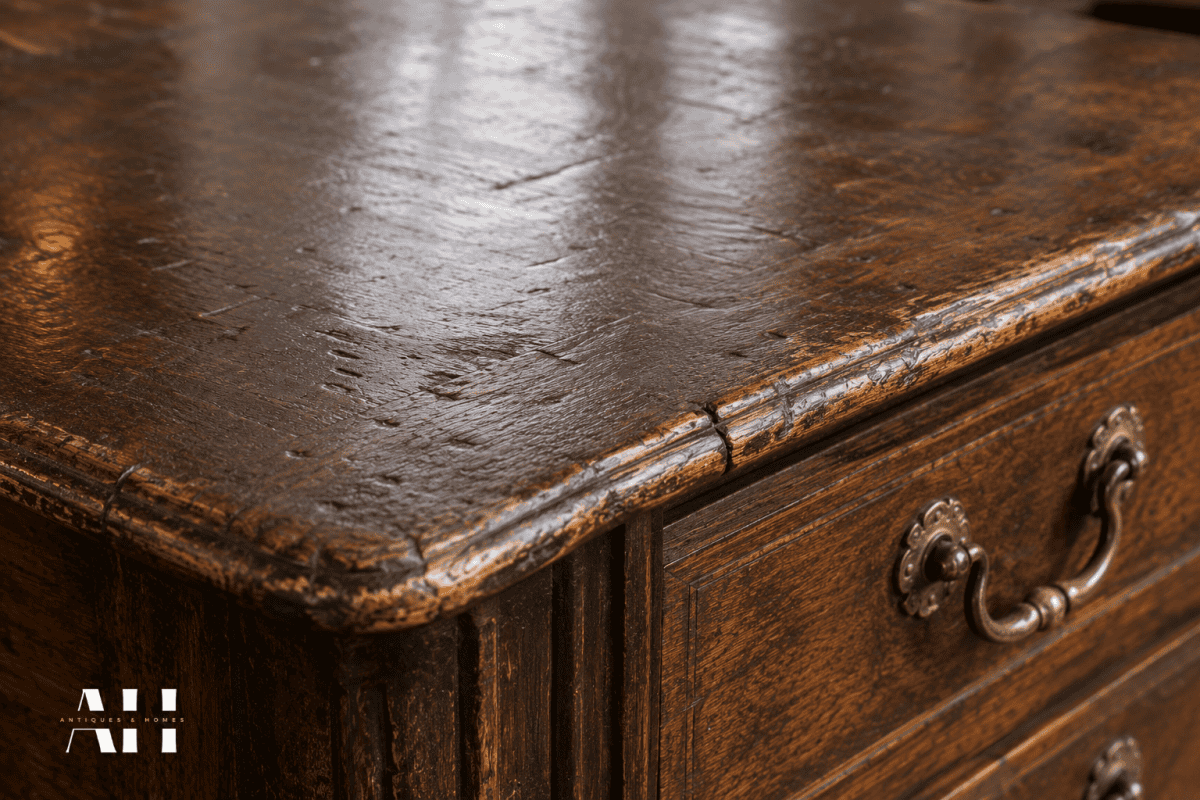
Natural ageing behaves very differently from artificial distressing. Consequently, wear patterns often provide some of the strongest clues when learning how to identify antique furniture.
Genuine antique furniture develops wear gradually through decades of use. Therefore, experienced collectors usually inspect areas handled most frequently, including drawer edges, table corners, armrests and feet.
Natural wear typically appears soft and uneven. Artificial ageing, however, often looks too deliberate or repetitive.
Patina also plays a huge role in antique furniture identification. Over time, old timber develops warmth, depth and variation that modern reproductions rarely recreate convincingly.
Natural wear, ageing and patina often reveal the authenticity and long history of antique furniture.
Looking After Antique Furniture Properly
Once you have identified a piece of antique furniture, looking after it properly is often more about knowing what not to do. An old surface does not need to look new. In fact, years of gentle wear, colour change and accumulated patina can form an important part of the furniture’s character.
Start with the least intervention possible. Regular light dusting with a soft, dry cloth is usually preferable to repeatedly applying cleaners, sprays or modern furniture polishes. Be particularly cautious with products containing oils, silicones or aggressive cleaning agents, which can alter an old finish and make future restoration more difficult.
Using Wax on Antique Furniture
A traditional paste wax can be useful on suitable finished wooden furniture, particularly when an existing surface has become dull and needs a little protection. However, more is certainly not better. Wax should form a very thin layer rather than a heavy coating that gradually collects in carvings, corners and around handles.
Before treating an unfamiliar piece, first establish what sort of surface you are dealing with. Painted, gilded, lacquered, badly deteriorated or particularly valuable furniture may need specialist advice rather than routine waxing.
For suitable wooden furniture, Roxil Beeswax Polish for furniture is one readily available option for collectors who prefer a traditional wax-based finish. As with any furniture treatment, test it discreetly first and use it sparingly rather than automatically applying it to every antique you own.
Protect the Furniture From Its Environment
Where you place antique furniture can matter as much as what you put on its surface. Strong direct sunlight can fade timber, veneers and upholstery, while excessive heat and large fluctuations in humidity can encourage timber movement, loose joints and lifting veneers.
Try not to position vulnerable pieces immediately beside radiators or other strong heat sources. Drinks, plant pots and wet objects also deserve obvious caution; water rings and moisture damage are considerably easier to prevent than repair.
Finally, resist the urge to erase every scratch, mark and imperfection. A century-old table should not necessarily look as though it left the workshop yesterday. Good care preserves the furniture while allowing its age and history to remain visible.
4. Turn Antique Furniture Over and Inspect Hidden Areas
Experienced antique dealers almost always inspect the hidden sections first.
The underside of tables, backs of cabinets and interior drawer sections frequently reveal more truth than polished exterior surfaces. Earlier furniture makers rarely wasted time fully finishing areas hidden from normal view.
Clues You May Find on Genuine Antique Furniture
Hidden and unfinished areas often preserve evidence that polished surfaces have lost. Because of this, genuine antique furniture may display several of the following clues.
Rough Saw Marks
Undersides, backs and drawer bottoms may retain visible saw marks because makers had little reason to finish areas that nobody normally saw.
Uneven Planing
Hand-planed timber can show subtle ridges, variations and an unevenness that differs from the consistently smooth finish produced by modern machinery.
Tool Marks
Chisel cuts, scribe lines and other workshop marks can survive around joints and hidden surfaces, providing useful evidence of how the furniture was made.
Natural Wood Movement
Solid timber expands, contracts and shrinks over time. Small gaps, slight warping and movement around joints can therefore form part of genuine ageing.
Surface Irregularities
Older handmade and early machine-made furniture rarely has absolute uniformity throughout. Small variations in hidden surfaces can be entirely consistent with period construction.
Logical Wear and Ageing
Genuine wear usually develops where hands, feet, drawers and other moving parts repeatedly made contact. Age should look convincing and correspond with how the furniture was actually used.
Remember: none of these features proves age by itself. Saw marks, tool marks, timber movement, construction and wear become much stronger evidence when several clues agree.
Modern reproductions generally appear much cleaner underneath because machine finishing creates more uniform surfaces.
Therefore, hidden areas often provide some of the clearest evidence when trying to identify antique furniture accurately.
5. How to Identify Antique Furniture Through Timber and Wood Grain
Different historical periods favoured different woods. Consequently, timber choice often helps collectors identify antique furniture more confidently.
Victorian furniture frequently used mahogany, walnut and oak, while many later reproductions relied heavily on veneered boards or machine-cut softwoods.
Collectors also look for natural shrinkage and movement because timber slowly expands and contracts over decades. This movement creates tiny gaps, warping and surface variation that modern reproductions rarely mimic naturally.
Older timber often feels denser and more substantial as well.
If you would like to explore the wider history of furniture styles and historical periods, the Victoria and Albert Museum guide to English furniture styles provides excellent background information.
Why Reproduction Furniture Still Confuses Collectors
Some reproduction furniture genuinely looks impressive. In fact, many pieces now carry enough age to confuse inexperienced buyers quite easily.
However, genuine antique furniture usually combines several important signs together:
- natural wear
- traditional construction methods
- period materials
- authentic patina
- evidence of hand craftsmanship
Because these characteristics develop slowly over long periods, reproductions often struggle to imitate all of them convincingly at once.
Useful Antique Furniture Reference Guides
Many collectors keep antique furniture reference books nearby when researching periods, construction methods and restoration details.
👉 View “How To Date Furniture” – an easy reference guide for collectors
Reference books often help collectors understand changing furniture styles, timber choices and historical construction methods more confidently.
Why Antique Furniture Continues to Appeal to Collectors
Although trends within the antique market constantly change, antique furniture continues to attract collectors because quality craftsmanship remains easy to appreciate.
Furthermore, older furniture often offers something modern flat-pack pieces rarely provide — individuality, durability and genuine historical character.
At Antiques & Homes, we regularly buy and sell antique and vintage furniture alongside decorative interiors, quirky collectables and unusual pieces for the home. Because stock changes frequently, it is always worth checking back to see what has recently arrived.
If you enjoy learning about traditional materials and antique identification, you may also enjoy our guide on the difference between silver and silver plate.
Frequently Asked Questions About Identifying Antique Furniture
Conclusion
Once collectors understand how to identify antique furniture properly, spotting genuine age becomes far less intimidating. Construction methods, timber choice, wear patterns and hidden details all help reveal authenticity.
Therefore, the next time you discover an interesting cabinet, table or chest of drawers, take a moment to inspect the finer details carefully. Very often, the smallest clues reveal the biggest story.
As an Amazon Associate, Antiques & Homes may earn from qualifying purchases.
