
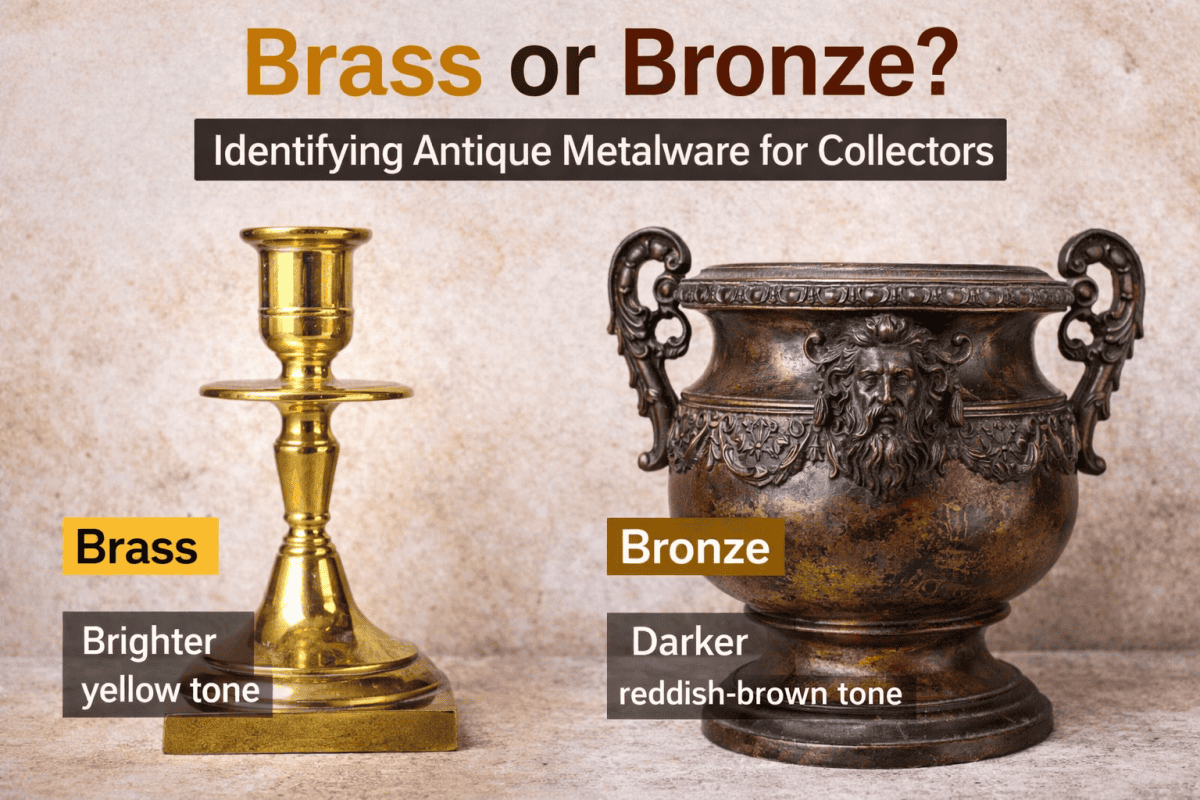
Collectors often ask a simple question when they handle antique metalware: is this brass or bronze? At first glance the two metals look similar. However, once you understand the differences, you can identify them quickly and confidently.
In fact, learning to distinguish brass or bronze forms an important skill for anyone who collects antique metal objects. Because many decorative antiques use these metals, recognising the difference helps collectors understand age, quality and craftsmanship.
Quick Answer: How Can You Tell Brass from Bronze?
The easiest way to distinguish brass from bronze is by looking at the colour and examining the casting. Brass usually has a brighter yellow-gold appearance with smoother surfaces, while bronze tends to be darker brown, often feels slightly heavier, and frequently displays finer casting detail. Although these clues are useful, age, patina and polishing can alter an object’s appearance, so collectors should always consider several identifying features together.
Brass or Bronze: Understanding the Basic Difference
First, it helps to understand why these two metals look so similar. Both brass and bronze are copper alloys, meaning copper forms the largest part of each metal. The difference lies in the second ingredient, and that single change affects everything from colour and weight to strength and the way each metal ages over time.
Brass
Copper + Zinc
Bronze
Copper + Tin
Both metals are copper alloys, but the second ingredient gives each one its distinctive colour, strength and working properties. This simple difference explains why brass and bronze often age differently and have traditionally been used for different purposes.
Because the alloy composition differs, each metal develops its own colour, weight and working characteristics. Consequently, antique craftsmen selected brass or bronze depending on the intended use.
For example, brass appears frequently in decorative household objects such as candlesticks, trays and chambersticks. Meanwhile, bronze often appears in sculptures, architectural fittings and heavy decorative castings.
Colour Clues When Identifying Brass or Bronze
Colour provides the easiest first clue when you examine antique metalware. Therefore, collectors often begin their inspection with a simple visual check.
Brass usually shows a warm golden colour. Sometimes the tone appears slightly yellow, especially on polished surfaces.
Bronze, in contrast, normally shows a deeper brown or reddish tone. In addition, aged bronze sometimes develops darker highlights.
However, collectors should remember one important point. Over many decades both metals develop patina. Consequently, colour alone should never provide the only test.
Weight and Density: Another Brass or Bronze Indicator
Next, experienced collectors often consider weight. Although the difference may feel subtle, bronze typically feels heavier than brass.
Because bronze contains more tin and less zinc, it usually forms a denser metal. Therefore, when you lift two similar objects, the bronze piece often feels slightly more solid.
This simple comparison trick helps collectors when they examine antique objects in markets or antique shops.
Surface Detail and Casting Quality
Surface detail also helps collectors identify brass or bronze. Bronze accepts casting extremely well, which allows makers to produce sharp detail.
Therefore, sculptures or ornate decorative pieces often use bronze rather than brass. Fine features such as facial details, feathers or floral patterns usually appear crisper in bronze castings.
In contrast, brass objects often show smoother surfaces and simpler decorative shapes. For instance, many Victorian candlesticks and domestic fittings use brass precisely because it polishes easily and resists corrosion.
Cleaning Brass and Bronze Carefully
Collectors often clean antique brass and bronze very gently in order to preserve original patina and avoid damaging older finishes.
👉 Browse Quickshine Brass and Copper Bath suitable for antique metalware
Aggressive modern cleaners can sometimes remove character and surface ageing, so many collectors prefer traditional products designed for antique brass and copper objects.
A Simple Collector Trick for Testing Brass or Bronze
Collectors sometimes use a small practical trick when they examine antique metalware.
First, look carefully at areas that receive wear, such as edges, bases or handles. Then check the colour beneath the surface patina.
If the metal underneath shows a bright golden tone, the object likely uses brass. However, if the underlying metal appears reddish brown, bronze often proves more likely.
Of course, collectors should always combine several clues rather than relying on one observation alone.
Visual Comparison
Brass or Bronze at a Glance
Brass
Colour: Brighter yellow-gold appearance, especially when polished.
Typical use: Decorative household items, candlesticks, fittings and ornaments.
Surface: Usually smoother with simpler decorative forms.
Bronze
Colour: Richer brown tone with a darker natural patina.
Typical use: Sculptures, figures and high-quality cast decorative pieces.
Surface: Often heavier with finer, sharper casting detail.
Collector’s Tip: Brass and bronze frequently appear side by side in decorative antiques. Use colour, weight, casting quality and patina together when identifying an object rather than relying on a single characteristic.
Why Do They Both Appear in Antique Metalware?
Historic craftsmen selected metals carefully depending on the intended purpose. Consequently, both brass and bronze appear widely in decorative antiques.
Brass offered several advantages. Firstly, it polished beautifully and reflected candlelight attractively. Secondly, craftsmen shaped it easily into domestic objects.
Bronze offered different strengths. Because bronze cast extremely well, artists used it for sculpture and elaborate decorative designs.
If you would like to explore more examples, our guide on collecting decorative antique metalware explains how these materials appear in antique interiors.
❝
The quickest way to identify brass and bronze is not by relying on a single clue, but by considering colour, weight, casting quality and patina together. Experienced collectors build confidence by looking at the whole object rather than one characteristic in isolation.
Antiques & Homes • Collecting Advice
Historical Context
The use of brass and bronze dates back thousands of years. In fact, entire archaeological periods take their name from bronze production.
However, decorative brass objects became especially popular during the eighteenth and nineteenth centuries. During this period, households across Britain and Europe used brass candlesticks, trays and kitchenware.
If you would like to explore the wider historical use of these alloys, the Encyclopaedia Britannica explanation of bronze alloys provides useful background information.
Useful Reference Books for Brass and Bronze Collectors
Many collectors keep antique reference books nearby when researching decorative metalware, casting styles and historical materials.
👉 View “Collecting Copper and Brass” by Geoffrey Wills
Reference books often help collectors identify styles, manufacturing techniques and decorative periods more confidently.
Conclusion
Once collectors learn the basic differences between brass or bronze, identification becomes much easier. Colour, weight, casting detail and wear patterns all provide useful clues.
Therefore, when you next examine antique metalware, take a moment to observe these details carefully. Over time, these small observations turn into instinct.
Because antique metal objects combine craftsmanship, history and design, they remain among the most rewarding areas of antique collecting.
Continue Exploring Antique Metalware
If you enjoyed learning about antique metalware, you may also enjoy exploring more collecting guides, identification articles and stories from the Antiques & Homes magazine.
👉 Continue exploring our antiques and collecting articles
Whether you collect brass, bronze, copper or decorative metalware, you’ll find practical advice, fascinating history and expert guidance to help you discover more.
