
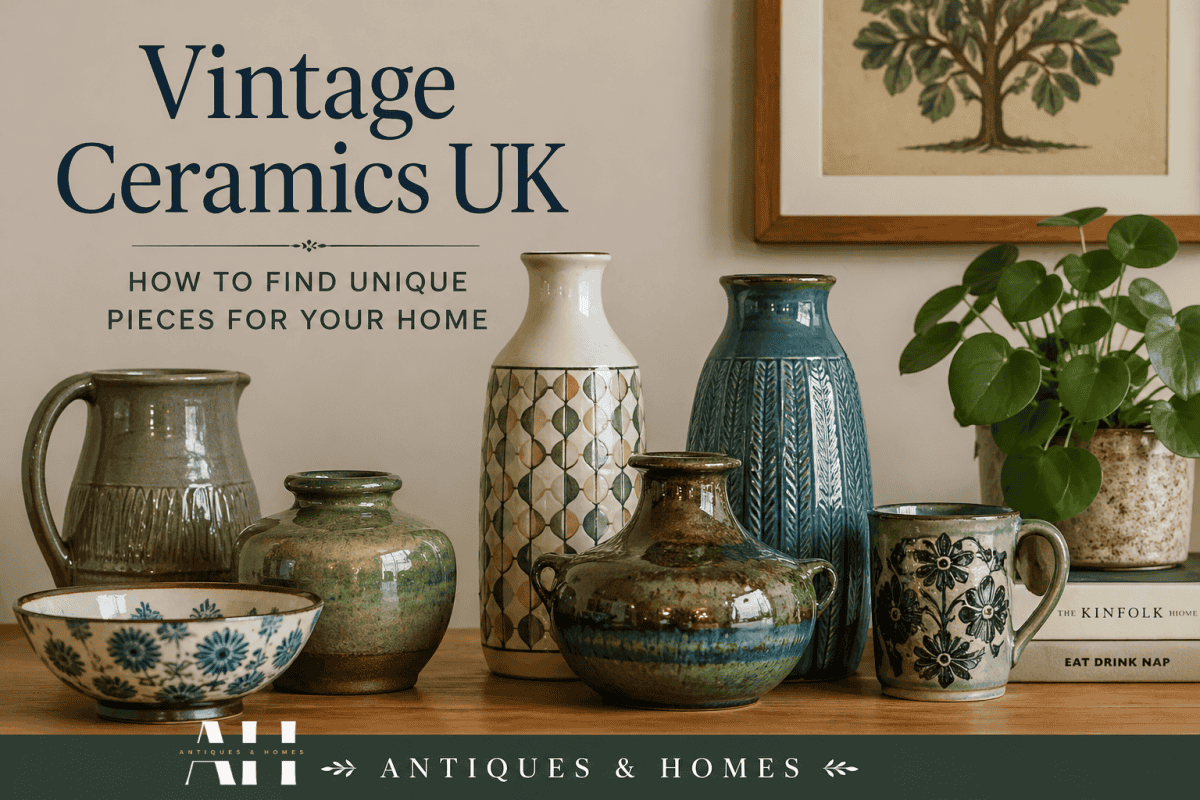
Vintage ceramics UK collectors and home decorators continue to seek out pieces with individuality, texture and history. While modern ceramics can look attractive, older pieces often bring more depth, character and charm into a room.
Many people start collecting vintage ceramics because they want something different. As a result, they look for pieces with interesting glaze, unusual shape, strong colour or a maker’s mark that tells part of the story.
Quick Answer
Vintage ceramics can often be identified by examining the maker’s mark, overall style, decoration, materials and age-related wear. Turning the piece over to check the backstamp is usually the best place to start, but successful identification also relies on recognising design movements, production techniques and the quality of manufacture. Taking time to compare genuine examples can quickly improve your confidence as a collector.
“Every piece of vintage ceramic tells two stories – who made it, and who treasured it.”
Antiques & Homes Collector’s Advice
Why Ceramics Collectors Love Character
Vintage ceramics often stand out because no two pieces feel exactly the same. For example, studio pottery may show hand-thrown lines, glaze movement or small variations from the firing process.
Furthermore, many older ceramic pieces reflect the design tastes of their period. Mid-century pottery often brings bold shapes and earthy tones, while more traditional pieces may feature floral decoration, transfer prints or hand-painted detail.
Because of this variety, vintage ceramics UK buyers can find pieces that suit both modern and traditional homes.
What to Look For When Buying Vintage Ceramics
When a piece of vintage pottery catches your eye, resist the temptation to look only at the decoration. Turn it over, examine it closely and consider how all the clues fit together.
Start with the base and backstamp. A maker’s mark can provide an immediate route into researching the factory, approximate period and sometimes even the range or designer. However, an unmarked base does not automatically mean a piece lacks quality or age. Studio pottery and smaller manufacturers frequently used impressed, incised or handwritten marks, while some pieces left the factory unmarked.
Next, examine the condition under good light. Small scratches and natural wear are perfectly reasonable on older ceramics. Chips, hairline cracks and restoration deserve more attention because they can affect both appearance and value.
Crazing also needs some judgement. Fine crazing can develop naturally as a glazed ceramic ages and does not necessarily make a decorative piece undesirable. However, extensive staining within the crazing, particularly on functional wares, can be much less attractive.
Vulnerable Areas On Vintage Ceramics
Run your eyes around vulnerable areas such as rims, handles, spouts and feet. These are common places for chips and restoration. Look for changes in colour, texture or gloss that might indicate an old repair. A repaired handle can appear convincing from the front but become obvious when examined from underneath.
Then consider the glaze and decoration. Does the quality look consistent across the piece? Hand-painted decoration may show subtle variations and individual brushwork. Transfer-printed decoration usually has a different character, while studio pottery often relies heavily on glaze effects, texture and the potter’s handling of the clay.
Shape can be just as revealing. The proportions of a vase, jug or bowl often reflect the period in which designers created it. A dramatically geometric Art Deco vase tells a very different story from the flowing natural forms associated with Art Nouveau.
Understanding the design movement behind a piece is therefore often as useful as identifying its maker. For a closer look at two important decorative styles, read our feature on the differences between Art Deco and Art Nouveau.
Finally, ask yourself a simple question: would you still want the piece if you never discovered who made it?
Maker, rarity and provenance certainly matter to collectors. However, good ceramics should also succeed as objects in their own right. Quality of form, glaze, decoration and craftsmanship can make an unidentified £20 vase far more satisfying than a mediocre piece carrying a fashionable name.
For anyone beginning to collect vintage ceramics UK examples, handling genuine pieces is one of the best ways to develop an eye. The more bases, glazes, marks and manufacturing techniques you examine, the easier it becomes to recognise when something deserves a closer look.
Studio Pottery, Decorative, and Everyday Pieces
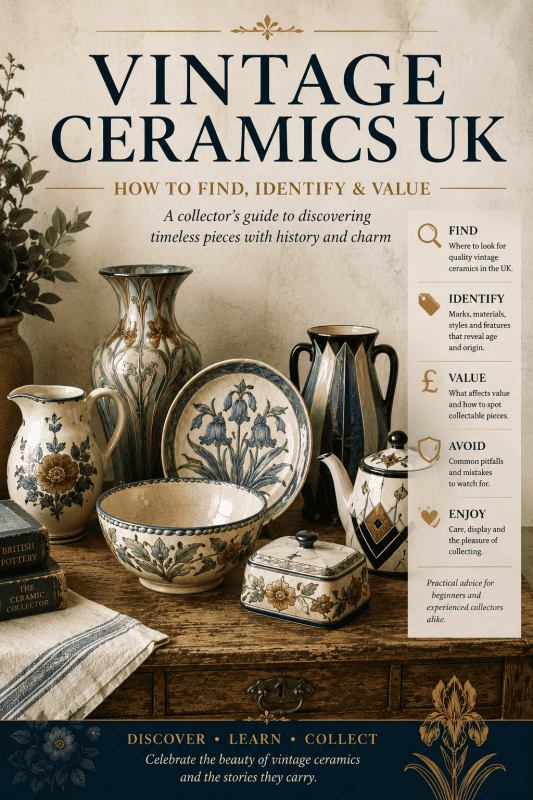
The world of ceramics offers plenty of variety. Studio pottery often attracts collectors who enjoy handmade forms and expressive glazes. Decorative ceramics, meanwhile, appeal to buyers who want colour, texture and visual impact.
In addition, everyday pieces such as bowls, jugs and small vases can still offer strong decorative appeal. Because these items often cost less than named studio pieces, they make a good starting point for new collectors.
If you want to learn more about the wider history and appeal of studio pottery, the Victoria and Albert Museum guide to studio pottery provides useful background.
How to Use Vintage Ceramics in Your Home
One of the reasons vintage ceramics have remained so popular is their ability to make a room feel lived in rather than simply decorated. Even a modest piece can introduce colour, texture and personality, especially when surrounded by natural materials such as timber, brass, glass or stone.
A single vase filled with seasonal flowers can become an elegant focal point on a dining table. Small jugs, bowls or ginger jars can add interest to a bookshelf or sideboard. Many collectors rotate their displays throughout the year. This gives favourite pieces time to shine without overcrowding the room.
Vintage Ceramics In Modern Interiors
Vintage ceramics also work surprisingly well in modern interiors. Clean contemporary furniture often provides the perfect backdrop for handmade pottery, colourful studio ceramics or decorative porcelain, allowing each piece to stand out while adding warmth that newer accessories sometimes lack.
Rather than trying to match every pattern perfectly, look for common themes instead. Similar colours, repeated shapes or complementary glazes usually create a display that feels relaxed and naturally collected over time. Mixing heights and leaving a little breathing space between objects also helps each piece tell its own story.
Most importantly, don’t hide your ceramics away in cabinets. The pieces that bring the greatest pleasure are usually the ones you see every day, whether they are displayed on open shelving, used to hold flowers or simply admired for the craftsmanship that has allowed them to survive for decades.
Decorating with Vintage Ceramics: Timeless Ideas
Collectors often discover that the real pleasure begins once a piece comes home. Vintage ceramics deserve to be enjoyed rather than hidden away, and even inexpensive examples can become striking focal points when displayed thoughtfully.
Create Small Collections
Three or five related pieces often make a stronger display than a crowded shelf of unrelated ceramics. Look for a common thread — perhaps colour, shape, period or maker — while allowing each piece enough space to be appreciated individually.
Mix Old with New
Vintage pottery can look surprisingly at home alongside contemporary furniture. Clean modern surroundings often provide an excellent backdrop for older ceramics, allowing their glaze, texture and craftsmanship to become the focus.
Vary the Heights
Combine taller vases or jugs with medium-sized pieces and lower bowls or dishes. Changing the height and scale creates movement across a shelf or sideboard and prevents a collection from looking like a regimented line of objects.
Use Ceramics Every Day
Not every vintage piece belongs behind glass. Suitable bowls, jugs and decorative vessels can look wonderful holding flowers, fruit or seasonal foliage. However, consider age, condition and glaze safety before using older ceramics for food or drink.
Collector’s tip: the most successful displays rarely contain the most objects. Give a particularly good piece some breathing room and it can have far more impact than it would squeezed into a crowded cabinet.
Finally, remember that empty space is just as important as the objects themselves. Leaving room around each piece highlights its colour, shape and craftsmanship. It also gives the display a relaxed, collected feel.
Why the Hunt Is Part of Collecting Vintage Ceramics
Part of the pleasure of collecting vintage ceramics is never knowing exactly what you will find. Antiques shops, fairs, auctions and markets rarely offer the neat predictability of modern retail.
One week you might encounter a striking piece of studio pottery. The next discovery could be an overlooked Art Deco vase or an attractive everyday jug with an unfamiliar backstamp.
As your knowledge grows, the hunt becomes more interesting. You begin recognising distinctive glazes, shapes and decoration before you even know who made the piece. Turning an intriguing pot over and discovering a familiar maker’s mark can become part of the enjoyment.
However, some of the best finds are not immediately identifiable. An unusual shape or beautifully handled glaze may justify closer investigation even when the maker remains unknown.
Vintage ceramics also have an individuality that modern mass-produced decoration struggles to reproduce. Age, manufacturing variations and decades of use mean two apparently identical pieces can develop very different character.
That unpredictability is precisely what keeps many collectors looking. You are not simply shopping for an object; you are waiting to discover something you did not know you wanted until you saw it.
“The backstamp may reveal the maker, but the craftsmanship reveals the quality.”
Antiques & Homes Collector’s Advice
Are Vintage Ceramics UK Pieces a Good Investment?
Many buyers ask whether vintage ceramics UK pieces hold their value. While not every item increases in price, well-chosen pieces can remain desirable over time, especially those with strong design, good condition or recognised makers.
However, most collectors focus on enjoyment first. Because styles change and availability varies, the appeal of vintage ceramics often comes from their look and feel rather than purely financial return.
If you choose pieces you genuinely like, you build a collection that feels personal. At the same time, you still hold items that others may want in the future.
Looking for Vintage Ceramics?
Reading about vintage ceramics is one thing, but nothing compares to seeing them in person. Examining the weight, glaze, decoration and craftsmanship of genuine pieces is one of the quickest ways to develop your eye as a collector.
We usually have a changing selection of vintage ceramics, pottery and decorative porcelain in our small antiques shop in Blofield, Norfolk. Stock changes regularly, so there is always something different to discover. Pieces range from everyday country pottery to decorative Art Deco and Art Nouveau ceramics.
Whether you’re searching for your first collectible or adding to an established collection, you’re always welcome to browse and ask questions. We enjoy helping collectors recognise quality pieces and understand the stories behind them.
Find out more about visiting our Blofield antiques shop →
Vintage Ceramics FAQs
How can I identify vintage ceramics?
Begin by turning the piece over and looking for a maker’s mark or backstamp. Then consider the style, decoration, materials, age-related wear and overall quality of manufacture before comparing it with documented examples.
Are all vintage ceramics valuable?
No. Age alone rarely determines value. Rarity, condition, maker, design, demand and provenance all play a much bigger role in establishing what a piece is worth.
What should I do if there is no backstamp?
Many genuine vintage ceramics were produced without a visible backstamp, while others have lost their marks through wear. Shape, glaze, decoration and construction often provide valuable clues to the maker or period.
How can I tell if a ceramic piece is old?
Look for consistent signs of age such as wear to the base, natural crazing, appropriate glaze characteristics and manufacturing techniques typical of the period. Genuine ageing is usually far more convincing than artificially distressed finishes.
Which vintage ceramics are most collectable?
British pottery, studio ceramics, Art Deco designs, Art Nouveau pieces, mid-century ceramics and examples from well-known manufacturers all have enthusiastic collector followings, although rarity and condition remain just as important as the maker.
Should I clean vintage ceramics before selling them?
Usually, gentle cleaning with warm water and a soft cloth is sufficient. Avoid harsh chemicals or abrasive cleaners, as they can damage glazes, remove original finishes and reduce a piece’s appeal to collectors.
Final Thoughts on Vintage Ceramics UK Collecting
Vintage ceramics UK collecting offers an accessible way to add history, texture and individuality to your home. Whether you prefer studio pottery, decorative vases or useful everyday pieces, ceramics can bring genuine charm into almost any room.
Because each piece carries its own shape, surface and story, vintage ceramics remain one of the most enjoyable areas to collect.
Build Your Collector’s Library
One of the quickest ways to become a more confident collector is to study genuine examples away from the antiques fair or auction room. Well-illustrated reference books help you recognise makers, understand decorative styles and compare authentic pieces from different periods, making future purchases far easier to assess.
Vintage Ceramics Reference Books
Whether your interest lies in British pottery, decorative porcelain, studio ceramics or everyday collectables, a good reference library is an invaluable companion. Browsing photographs, maker’s marks and historical notes will soon sharpen your eye and help you identify quality pieces with greater confidence.
Browse our Vintage Ceramics book collection →
Disclosure: As an Amazon Associate, Antiques & Homes may earn a small commission from qualifying purchases. This comes at no extra cost to you and helps support our independent collector guides.
