
Many collectors begin with porcelain, glass or coins. However, decorative antique metalware often proves just as rewarding. Brass candlesticks, copper trays, bronze ornaments, silver boxes and old desk accessories combine practical history with the kind of craftsmanship that modern objects rarely match.
These pieces were made to be used. They stood on writing desks, lit dining tables, held flowers, carried drinks and filled Victorian and Edwardian homes with warmth and detail. Today, they offer collectors an accessible way to bring genuine age and character into both traditional and contemporary interiors.
Quick Answer: What Is Decorative Antique Metalware?
Decorative antique metalware includes older household and ornamental objects made from materials such as brass, bronze, copper, pewter and silver plate. Common examples include candlesticks, chambersticks, trays, inkwells, vases, desk accessories and decorative dishes. Collectors value these pieces for their craftsmanship, patina, practical history and ability to add warmth and character to a home.
“Collecting decorative antique metalware does not require a large budget or a specialist display room. A single well-chosen candlestick, inkwell or engraved tray can change the atmosphere of a shelf, mantelpiece or side table.”
— Antiques & Homes Collector’s Advice
Why Decorative Antique Metalware Appeals to Modern Homes
Interior fashions change constantly, yet antique metalware rarely falls completely out of favour. One reason is that metal brings warmth without needing bright colour. A softly polished brass candlestick or darkened copper bowl catches the light gently and introduces depth into a room.
Antique metalware also works surprisingly well in modern interiors. Against plain walls, simple furniture and neutral fabrics, an old metal object provides contrast without overwhelming the space. The piece does not need to match everything around it. Its age, surface and shape create the interest.
Traditional interiors naturally suit brass, bronze and copper. However, these materials also sit comfortably in industrial, minimalist and eclectic rooms. A Victorian inkwell on a modern desk or a group of old candlesticks on a simple mantelpiece can look deliberate rather than old-fashioned.
The best displays often avoid perfection. Matching sets can look impressive, but a mixture of heights, finishes and periods usually feels more personal. A dark bronze figure beside a warm brass tray and a reddish copper vessel creates a layered display that changes as the daylight moves across it.
Common Types of Decorative Antique Metalware
Collectors quickly discover that decorative antique metalware covers an enormous range of objects. Some pieces were purely ornamental, while others began as practical household items and only later became collectable.
Brass Candlesticks and Chambersticks
Candlesticks remain one of the easiest and most enjoyable entry points into antique metalware. They appear in countless shapes, from simple turned Georgian forms to heavier Victorian examples with broad bases and decorative stems.
Chambersticks were designed to carry a candle from room to room. Many include a handle, a broad drip pan and sometimes a separate snuffer. More elaborate examples may feature push mechanisms that raise the candle as it burns down.
Condition matters, but collectors should not expect absolute uniformity. Old candlesticks often show small dents, leaning stems, softened detail and traces of polish in recessed areas. These signs usually reflect long domestic use rather than serious damage.
Pairs often attract more interest, although single candlesticks can be just as effective when displayed among books, ceramics or framed pictures. Uneven pairs can also look attractive when their heights and styles complement one another.
Inkwells and Desk Accessories
Nineteenth-century writing desks required far more equipment than modern desks. Inkwells, pen trays, blotters, stamp boxes, letter racks and desk stands all became opportunities for makers to combine function with decoration.
Brass and bronze desk accessories frequently feature animals, classical figures, Gothic ornament or naturalistic motifs. Some inkwells disguise themselves as shells, helmets, birds or pieces of architecture. Others rely on restrained design and high-quality casting.
When examining an inkwell, look for missing glass liners, damaged hinges and replaced fittings. A complete original liner adds appeal, although a strong decorative design can still make an incomplete example worthwhile.
Desk accessories work particularly well in modern homes because they do not need to perform their original function. An old pen tray can hold jewellery, keys or spectacles, while an inkwell can stand as a small sculptural object.
Decorative Trays and Dishes
Antique trays range from small engraved calling-card dishes to large serving trays with handles and elaborate borders. Brass and copper examples may feature repoussé decoration, hand engraving, pierced edges or applied motifs.
Many collectors use smaller trays as part of table displays. They can hold candles, small ceramics, perfume bottles or groups of natural objects. Larger trays often work well against a wall or standing behind other items on a sideboard.
Surface wear deserves careful attention. A few scratches and gentle rubbing may suit an old tray, but deep dents, splits and badly distorted edges can affect both appearance and usefulness. Repeated polishing may also flatten engraved detail and leave the surface looking unnaturally bright.
Metal Vases and Decorative Vessels
Metal vases appear in many forms, from hand-hammered Arts and Crafts copper to heavily cast Victorian brass and bronze. Floral, classical and East Asian influences often shaped their decoration, reflecting the changing tastes of the period.
Some examples display engraved patterns or applied relief decoration. Others rely on shape, surface and colour. Even without flowers, a good metal vase can create a strong vertical accent on a mantelpiece, sideboard or bookcase.
Collectors should check bases, seams and handles carefully. Old solder repairs may not ruin a piece, although crude modern repairs can affect value and appearance. Verdigris around joins may indicate trapped moisture or corrosion and deserves closer inspection.
Bronze Figures and Small Sculptural Objects
Small bronze figures bridge the gap between decorative metalware and sculpture. Animal studies, classical subjects, military figures and allegorical pieces all appear regularly in the antiques trade.
Quality varies enormously. Good examples usually show confident modelling, convincing anatomy and carefully finished surfaces. Poorer castings often look soft, flat or clumsy, particularly around faces, hands and fine details.
Not every dark metal figure is bronze. Spelter, brass and other alloys can receive bronze-coloured finishes. Weight, surface wear, construction and casting quality all help form a more reliable opinion than colour alone.
Decorative Antique Silver: When Metalwork Became an Art Form
Silver has always been about far more than cutlery and practical tableware. Some of the most appealing decorative antique metalware was created specifically to impress, combining the silversmith’s technical skill with elaborate chasing, engraving, repoussé work and cast decoration.
Look beyond conventional tea services and you enter a wonderfully varied world. Decorative silver can include ornate candlesticks, centrepieces, pierced baskets, boxes, photograph frames, dressing-table pieces, card cases, miniature objects and elaborate serving pieces. Even practical objects were frequently embellished until their decorative purpose became almost as important as their original function.
Victorian silver can be particularly exuberant. Naturalistic leaves, flowers, scrolling foliage, shells and classical ornament appear alongside revival styles inspired by earlier centuries. By contrast, later Arts and Crafts and Art Nouveau metalwork often relied more heavily on flowing lines, hammered surfaces and the character of the material itself.
One of the pleasures of finding an interesting piece of antique silver is turning it over. Unlike much decorative metalware, British silver often carries a surprisingly detailed record of its origins. Hallmarks can reveal where an item was assayed, its date and the registered maker or sponsor responsible for submitting it.
However, decorative silver was produced far beyond Britain. Continental and international pieces can carry marks that are much less familiar, making a specialist reference particularly useful.
A Useful Reference for Silver Collectors
When an attractive piece carries unfamiliar silver marks, identifying them can transform an anonymous decorative object into something with a maker, place and history. Miller’s Encyclopedia of World Silver Marks is a useful reference for researching silver marks from Britain and around the world.
👉 View Miller’s Encyclopedia of World Silver Marks on Amazon
Of course, a hallmark should never distract from the object itself. An elaborate silver box or beautifully worked candlestick can be worth appreciating for its design and craftsmanship before you have identified every mark underneath it. For collectors, though, discovering exactly who made it and when is often part of the fun.
The Appeal of Patina and Honest Age
One of the first lessons in collecting antique metalware involves learning the difference between dirt, damage and patina. These are not the same thing, although they are often treated as if they were.
Patina develops gradually through handling, oxidation, polishing and exposure to the atmosphere. Brass can acquire deep golden and brown tones. Copper often darkens towards red and chocolate, while bronze may develop green or black surface changes.
If brass and bronze are already part of your collection, telling them apart is not always as straightforward as colour alone suggests. Our Brass or Bronze? How to Tell the Difference in Antique Metalware guide looks at weight, colour, patina, construction and other practical clues that can help identify what you are handling.
A good patina gives an object depth. It settles into engraved lines, emphasises casting and softens the brightness of the metal. When collectors describe a surface as honest, they usually mean that the finish looks consistent with the object’s age and use.
Artificial ageing rarely produces the same effect. Chemical treatments can darken metal quickly, but they often create a flat or overly even appearance. Genuine wear tends to appear where hands touched the object, where cloths polished raised areas and where dust remained in recesses.
Collectors should still distinguish attractive patina from active corrosion. Powdery green deposits on copper alloys, heavy flaking, deep pitting or damp-related staining may require attention. Gentle, stable surface changes are part of the object’s history; ongoing corrosion can continue to damage it.
For a broader look at the history and techniques of decorative metalwork, the Victoria and Albert Museum’s guide to metalwork provides useful background.
How to Judge Quality in Antique Metalware
Age alone does not make an object good. Two pieces from the same period can differ enormously in quality, and handling them often reveals more than photographs ever can.
Begin with the overall shape. Well-designed objects usually look balanced from several angles. Handles should relate naturally to the body, decoration should suit the scale and bases should feel proportionate rather than awkward.
Next, examine the casting or workmanship. Crisp edges, clearly defined motifs and carefully finished surfaces often indicate greater care. Rough seams, uneven decoration and poorly finished undersides may suggest cheaper manufacture, although some honest workshop marks are entirely consistent with age.
Weight can be informative, but it should never become a rule by itself. A substantial brass object may feel reassuringly heavy, while a hand-raised copper piece can feel surprisingly light. Construction matters more than simple weight.
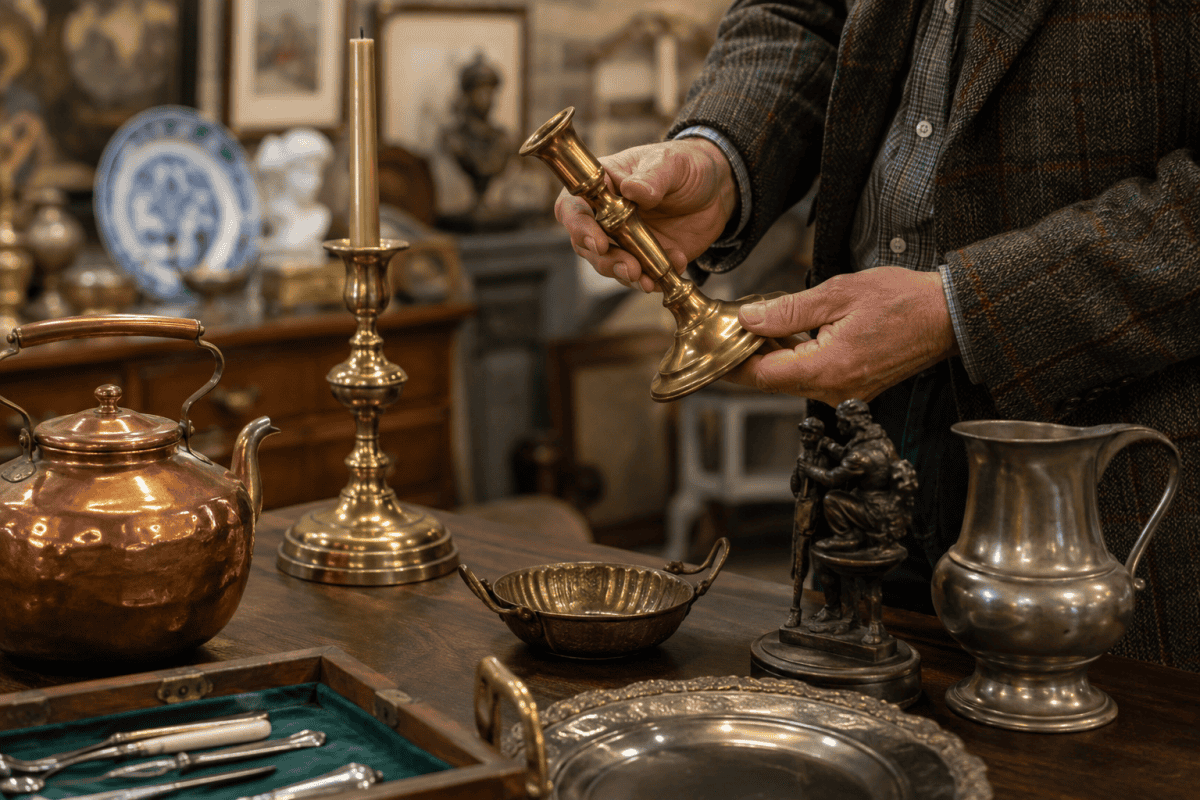
Look underneath whenever possible. Bases often reveal old screws, solder lines, casting marks, maker’s stamps and evidence of repair. The underside also shows whether the surface colour continues naturally or stops where a later finish was applied.
A Collector’s First Inspection
Before deciding whether a piece deserves a place in your home, take a few quiet moments to examine how it was made, how it has been used and what may have happened to it over the years. These first observations often reveal far more than a polished surface or an attractive shape.
How to Start Collecting Decorative Antique Metalware
Many people assume antique collecting requires a large budget. Decorative metalware proves otherwise. Simple candlesticks, small dishes, desk ornaments and trays often remain accessible, particularly when bought for design rather than maker or rarity.
Start with objects you genuinely like. A collection built only around supposed value quickly becomes joyless. Shape, surface, usefulness and the way an item fits into your home usually provide a better starting point.
Handling as many pieces as possible helps enormously. Visit antiques fairs, auction viewings, antique centres and museums. Even when you buy nothing, comparing weight, construction and patina gradually develops your eye.
It also helps to choose a loose direction without becoming too restrictive. You might focus on candlesticks, Arts and Crafts copper, animal-themed desk accessories or metalware from a particular period. Equally, you may prefer an eclectic collection united by colour and shape rather than date.
Keep brief notes about purchases, especially when a piece carries a maker’s mark or comes with useful provenance. Photographs of marks, repairs and construction details can also prove valuable later.
Displaying Decorative Antique Metalware at Home
Metalware rewards thoughtful display because its appearance changes with light. Brass glows warmly in afternoon sun, while bronze and darkened copper create stronger shadows and a more sculptural presence.
Mantelpieces naturally suit candlesticks, small figures and chambersticks. Varying the height of the objects creates rhythm, although too many similar pieces can make the display look crowded.
Desk accessories work well beside books, framed prints and old writing equipment. Trays can anchor smaller collections, while metal vases provide height among lower objects.
Mixed displays often feel more relaxed than groups made entirely from metal. Brass beside blue-and-white ceramics, copper beside clear glass or bronze against old leather-bound books creates contrast without losing cohesion.
Avoid placing valuable pieces where they may be knocked, exposed to persistent damp or subjected to strong heat. Metal may appear indestructible, but thin handles, old solder joints and projecting decoration can remain vulnerable.
“The best antique metalware does not need to dominate a room. Give it the right light, a little space and good company, and the metal will do the rest.”
Cleaning Decorative Antique Metalware Without Removing Its Character
Cleaning antique metalware often causes more anxiety than buying it. The central question is not how to make the object shine, but how much of its existing surface should remain.
Before applying polish, remove loose dust with a soft brush or cloth. Examine the surface carefully and decide whether the darkness enhances the detail or simply hides it. In many cases, light cleaning produces a better result than complete polishing.
Commercial metal polish can be useful, but use it sparingly. Repeated heavy polishing gradually softens engraved detail, rounds sharp edges and removes surface history. Residue can also collect in ornament and leave pale deposits.
Never use wire wool, harsh abrasives or aggressive household cleaners on antique metalware. These methods can scratch the surface permanently and produce an unnatural finish.
Objects with mixed materials require particular care. Wood, ivory substitutes, stone, glass liners, painted decoration and old felt bases may react badly to metal cleaners. Apply products only to the intended surface and avoid soaking assembled pieces.
When an object has unusual value, delicate decoration or active corrosion, professional advice may prove safer than experimentation. Once an original surface has been stripped away, it cannot easily be restored.
Why Antique Metalware Remains Collectable
Decorative antique metalware survives because it combines several kinds of appeal. It offers useful social history, visible craftsmanship, practical durability and strong decorative presence.
A candlestick reveals how homes were lit. An inkwell recalls a world of handwritten letters and formal desks. A tray shows the importance once placed on serving and hospitality. These are not remote museum objects; they belonged to ordinary routines.
Metalware also rewards close inspection. Casting marks, hand-tooling, old repairs and surface wear all provide evidence of manufacture and use. Even when the maker remains unknown, the object itself can tell a convincing story.
Collectors interested in identifying related materials may also enjoy our guide to the difference between silver and silver plate and our practical article on how to tell silver from pewter.
Most importantly, decorative metalware remains usable. A tray can still serve, a candlestick can still hold a candle and an old desk accessory can take on a new role. That combination of history and usefulness gives these objects a place in homes that might not otherwise contain antiques.
Frequently Asked Questions About Decorative Antique Metalware
What counts as decorative antique metalware?
How can you tell if antique metalware is good quality?
Should antique brass and copper be polished?
Do repairs reduce the value of antique metalware?
Is patina the same as dirt or corrosion?
What is the best decorative antique metalware for beginners?
Can decorative antique metalware still be used?
Collecting for the Home Rather Than the Display Case
One of the great strengths of decorative antique metalware is that it does not need to live behind glass. These objects originally belonged to ordinary rooms, and they often look most convincing when returned to that setting.
A brass candlestick beside a stack of books, a copper tray beneath a group of small objects or an old inkwell on a writing desk can feel natural rather than staged. The aim is not to recreate a period room, but to let an antique add depth and individuality to the space around it.
This approach also makes collecting more personal. Instead of pursuing a complete set or a fashionable maker, you can choose pieces that suit the scale, colour and atmosphere of your home. A modest object with the right shape and surface may bring more pleasure than a rarer piece that never feels comfortable in its surroundings.
Because metalware works so well with other materials, it also provides an easy bridge between collecting fields. Brass warms cool ceramics, dark bronze gives structure to glass displays and copper sits beautifully beside old wood, leather and textiles.
When Age Adds Character and When It Becomes Damage
Collectors often face a difficult judgement: how much wear feels attractive, and when does that wear become a problem?
Gentle rubbing on handles, softened edges and a naturally varied surface usually add character. These marks show where an object was touched, cleaned and used. In many cases, they help make the piece feel genuine.
Damage becomes more serious when it affects stability, structure or appearance. Split seams, loose handles, active corrosion, badly distorted bases and extensive loss can all alter the way an object functions and displays.
The key lies in judging the object as a whole. A strong design may tolerate minor damage, while a delicate piece may depend on perfect balance and crisp detail. Collector judgement develops through experience, and no simple checklist replaces handling many examples.
Final Thoughts
Collecting decorative antique metalware offers an accessible way to bring history, craftsmanship and atmosphere into the home. These objects do not rely on bright colour or obvious rarity. Their appeal often lies in shape, surface and the quiet evidence of long use.
A good piece rewards close inspection. Turn it over, study the joints, look at the wear and consider how the maker balanced function with decoration. Even when the maker remains unknown, the object can still reveal how it was made and how people once lived with it.
The most satisfying collections rarely begin with a grand plan. They grow from one object that catches the eye: a heavy brass candlestick, a dark bronze figure or a copper tray with a particularly attractive surface.
From there, the collector begins to notice details that once went unseen. Patina becomes more than tarnish, old repairs become part of the story and everyday household objects begin to look like small records of craftsmanship and domestic life.
That is the real pleasure of decorative antique metalware. It allows history to remain visible, useful and comfortably at home rather than confined to a museum case.
Affiliate Disclosure: As an Amazon Associate, Antiques & Homes may earn a small commission from qualifying purchases made through links in this article. This comes at no extra cost to you.
