
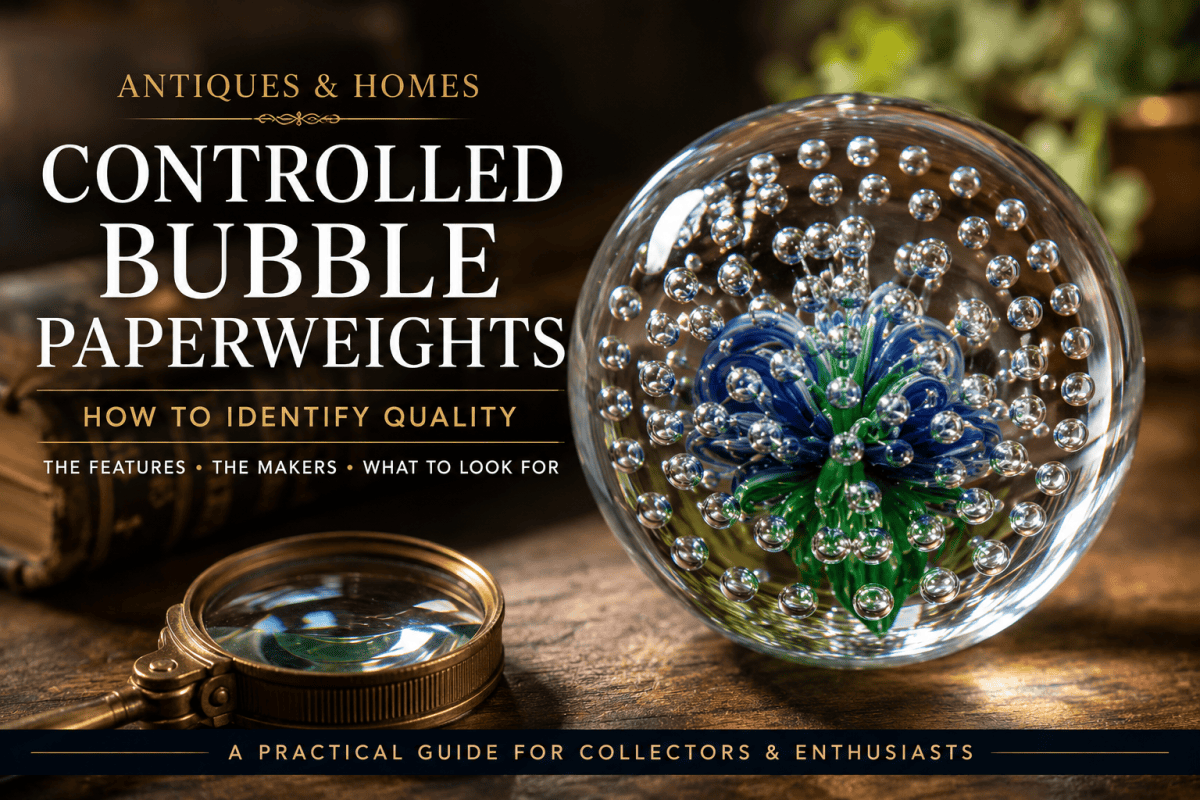
Controlled bubble paperweights often attract attention because they combine studio glass craftsmanship with a calm, modern appearance. However, many collectors feel unsure about what the term actually means or why these pieces remain popular. This guide explains controlled bubble paperweights clearly, therefore helping both new and experienced collectors recognise the technique and appreciate how it works within vintage glass design.
Quick Answer: What Is a Controlled Bubble Paperweight?
A controlled bubble paperweight is a decorative glass paperweight containing bubbles that the glassmaker deliberately arranged into precise patterns while the glass remained molten. Unlike random air bubbles, these bubbles form organised spirals, flowers, grids, concentric rings and other symmetrical designs. Collectors value controlled bubble paperweights for their craftsmanship, visual appeal and the skill required to create perfectly balanced internal patterns.
How Controlled Bubbles Form Inside Glass
The technique connects closely to traditional glassblowing methods. During glassblowing, artists introduce air into molten glass to form an internal cavity or bubble, then gather more glass around it before shaping the object.
However, controlled bubble paperweights go further. Makers carefully trap smaller pockets of air between layers of glass, which creates repeating patterns or shimmering effects when light passes through the dome.
Because glass cools gradually, those bubbles distort slightly as the piece is moved and turned during shaping. Consequently, every paperweight develops subtle differences, even when the design concept remains the same. Studio glassmakers introduce air deliberately during shaping, a technique explained clearly within the Corning Museum of Glass All About Glass educational resource.
“The bubbles inside a quality paperweight never appear accidental. Every line, curve and spiral reflects decisions made by the glassmaker while the glass was still molten.”
— Antiques & Homes Collector’s Advice
Why Collectors Love Controlled Bubble Designs
Murano glassmakers and Whitefriars makers often treated controlled bubble patterns as a primary decorative feature, and many collectors first encounter the technique through Italian and British mid-century glass. If you are trying to decide whether an unidentified piece is genuinely Murano, our identification guide explains the labels, bases, techniques and other evidence worth examining. If you are trying to decide whether an unidentified piece is genuinely Murano, our identification guide explains the labels, bases, techniques and other evidence worth examining. Scottish studios such as Caithness and Selkirk also explored controlled bubble paperweights; they frequently combined bubbles with colourwork or modern studio motifs rather than relying on the bubbles alone.
Controlled bubble paperweights appeal to collectors for several reasons. First, the technique produces a sense of movement without overwhelming the design. Secondly, the bubbles interact with colour and light, therefore creating depth even in simpler styles.
Scottish studios such as Caithness and Selkirk used controlled bubble patterns widely during the late twentieth century, especially in modern art glass pieces. Many designs combine internal ribbons, colours, or floral motifs surrounded by carefully placed bubbles, which gives the paperweight a layered appearance.
As you become familiar with controlled bubble paperweights, you will naturally begin recognising the distinctive styles of makers such as Whitefriars, Caithness, Selkirk and Murano. A good reference book can make this learning process much quicker, particularly when comparing colours, techniques and manufacturing styles.
One book many collectors keep close to hand is Miller’s Field Guide: Glass. Designed to fit easily into a pocket or bag, it provides an accessible introduction to identifying antique and studio glass while visiting antiques fairs, auctions and shops. It makes an excellent companion for anyone beginning a collection of controlled bubble paperweights or exploring decorative glass more widely.

Controlled Bubble Paperweights in Interior Design
Although collectors appreciate technique, controlled bubble paperweights also work beautifully in home décor. Because the bubbles catch light differently throughout the day, a small group placed together can create a strong visual feature without feeling heavy.
For example, arranging several bubble paperweights on a console table or bookshelf introduces gentle reflection and movement. Meanwhile, combining different colours or sizes can add interest without needing large decorative objects.
If you enjoy using antiques within modern interiors, our guide to vintage décor ideas explains how smaller glass pieces can transform a space:
As a result, collectors often begin with a single piece, then gradually build a display that reflects personal taste rather than strict collecting rules.
How to Identify Genuine Controlled Bubble Paperweights
How to Recognise a Controlled Bubble Pattern
When examining a paperweight, concentrate on whether the bubbles appear deliberately arranged rather than naturally trapped inside the glass. Skilled makers carefully planned every stage of the design, resulting in patterns that feel balanced, precise and symmetrical.
Even Spacing
Individual bubbles usually sit at regular intervals rather than clustering randomly. Consistent spacing creates a calm, balanced appearance that immediately suggests careful planning.
Repeating Patterns
Look for spirals, rings, stars, flowers or other repeating shapes. Controlled bubble paperweights rely on symmetry, with each section supporting the overall design.
Clear Glass Layers
The best examples show distinct layers of perfectly clear glass separating each row of bubbles. This depth gives the design its three-dimensional appearance and highlights the maker’s skill.
However, not every paperweight with bubbles counts as controlled bubble glass. Some older pieces contain accidental air pockets created during production, therefore the arrangement may look irregular or scattered.
One detail many new collectors underestimate is just how much becomes visible under magnification. Tiny surface scratches, polished pontils, engraved signatures and subtle bubble alignment often reveal themselves only when viewed closely.
A useful addition to any collector’s toolkit is the GABORISH Large Magnifying Glass with Light. Its large glass lens and adjustable LED lighting make it much easier to study internal bubble patterns, inspect polished bases and search for etched maker’s marks without straining your eyes. Whether you’re browsing an antiques fair or examining a recent purchase at home, a quality illuminated magnifier quickly becomes one of the most useful paperweight identification tools you own.
Why This Technique Still Matters Today
Glassmakers once viewed bubbles as imperfections, yet contemporary studio artists transformed them into a recognised decorative method.
Because of that shift, controlled bubble paperweights bridge traditional craftsmanship with modern design thinking.
Collectors often appreciate this balance. On one hand, the pieces remain rooted in historical glassmaking methods. On the other, they feel fresh and contemporary enough to suit modern interiors.
Frequently Asked Questions About Controlled Bubble Glass Paperweights
What are controlled bubble designs in glass paperweights?
How can you tell if bubbles inside a paperweight are intentional?
Which makers are best known for controlled bubble paperweights?
Are controlled bubble paperweights collectable?
Do controlled bubble paperweights make good display pieces?
Final Thoughts on Controlled Bubble Paperweights
Controlled bubble paperweights offer an accessible entry point into vintage and studio glass collecting. Because the technique focuses on light, clarity, and movement, these pieces feel both decorative and timeless.
Whether you collect Scottish glass or simply enjoy thoughtful design, understanding how controlled bubbles form can deepen your appreciation for the artistry behind each paperweight. Therefore, the next time you see those floating air pockets inside a glass dome, you may notice the careful craftsmanship that makes the design work.
Affiliate Disclosure: Antiques & Homes participates in the Amazon Associates Programme. This means we may earn a small commission if you purchase through links on this page, at no additional cost to you. We only recommend books, tools and products that we believe offer genuine value to collectors and enthusiasts.
