
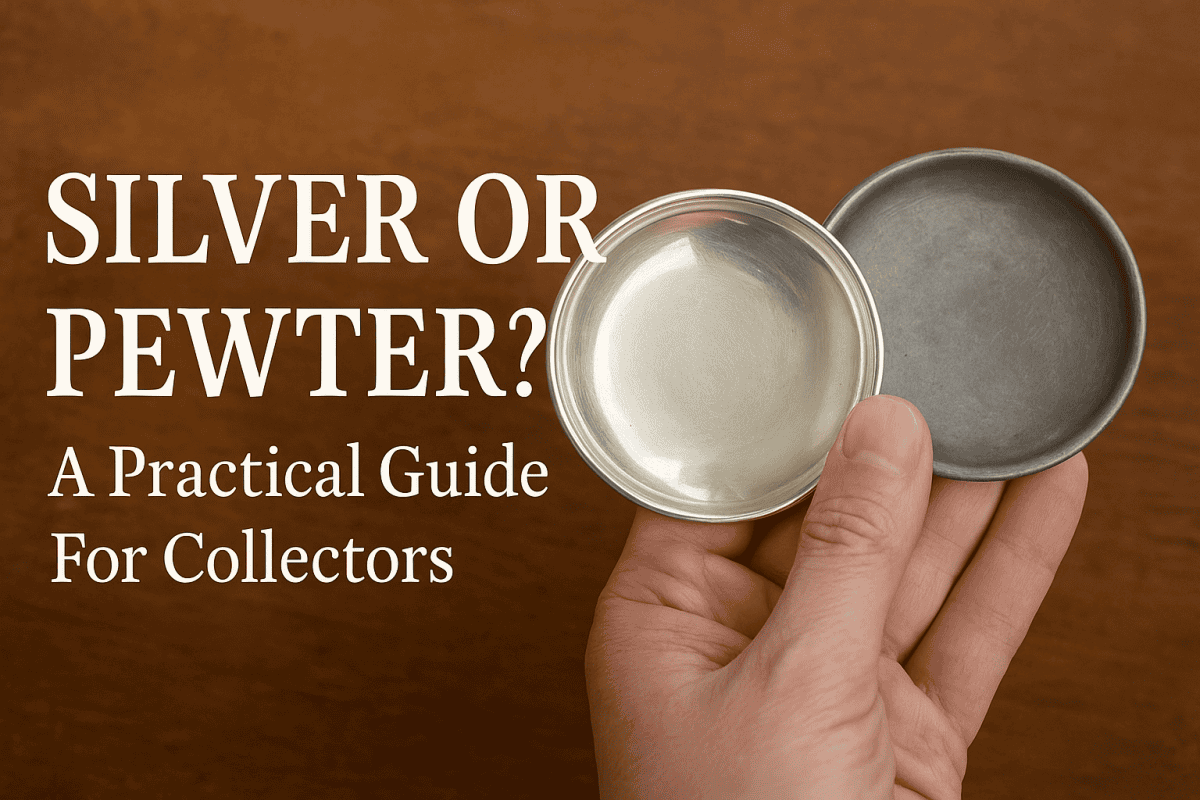
When you pick up an old tankard, candlestick, tray or piece of antique cutlery, one question often comes to mind almost immediately: is it silver or pewter? At first glance the two metals can look remarkably similar, especially after decades of polishing, tarnishing and everyday use.
Fortunately, there are several reliable ways to tell the difference. You do not need expensive equipment or years of experience to identify most pieces with confidence. By checking a handful of simple clues such as hallmarks, weight, colour, sound and surface finish, you can usually reach the correct answer within a few minutes.
After handling antique silver and pewter for many years, I have found that no single test tells the whole story. Instead, experienced collectors combine several observations before reaching a conclusion. This guide explains exactly what to look for and highlights some of the common mistakes that often catch beginners out.
Whether you have inherited a family heirloom, discovered an interesting item in an antique centre or picked up an intriguing piece at a car boot sale, this practical guide will help you decide whether you are holding silver or pewter.
Quick Answer: Silver Or Pewter?
The quickest way to tell silver from pewter is to look for hallmarks. Genuine British sterling silver normally carries a full set of official assay marks, including the lion passant, while pewter usually has simple maker’s touch marks or is stamped “Pewter”. Silver also feels noticeably heavier, polishes to a brighter white finish and produces a clear ringing sound when gently tapped. Pewter is softer, lighter, warmer to the touch and develops a smooth grey patina rather than the darker tarnish associated with silver.
If an item has no obvious marks, combine several checks including its weight, colour, craftsmanship and ageing patterns before deciding whether it is silver or pewter.
Why Silver Or Pewter Gets Confused
It is easy to understand why so many people struggle to tell silver from pewter. Both metals have been used for centuries to produce everything from tankards and candlesticks to serving trays, teapots and decorative ornaments. After decades of use, cleaning and natural ageing, their appearance can become surprisingly similar.
Many of the items brought into our shop are initially described simply as “old silver”, only for closer inspection to reveal that they are actually pewter or silver-plated metal. Occasionally, the opposite happens, and an overlooked piece of sterling silver has been mistaken for pewter because it has become heavily tarnished over time.
The confusion often begins with colour. Both metals share a cool grey appearance, particularly when they have not been polished for many years. However, that is largely where the similarities end. Silver and pewter differ in weight, hardness, value, manufacture, ageing characteristics and the marks left by their makers.
Fortunately, you do not need to rely on guesswork. By working through a few simple checks, you can usually identify the metal with confidence in just a few minutes, even if you have never handled antique silver or pewter before.
Look At The Hallmarks First
Hallmarks should always be your first check because they can identify genuine silver more reliably than colour, weight or shine alone. British silver has been controlled through an official assay system for centuries, and most pieces carry a group of small stamped symbols rather than one simple word.
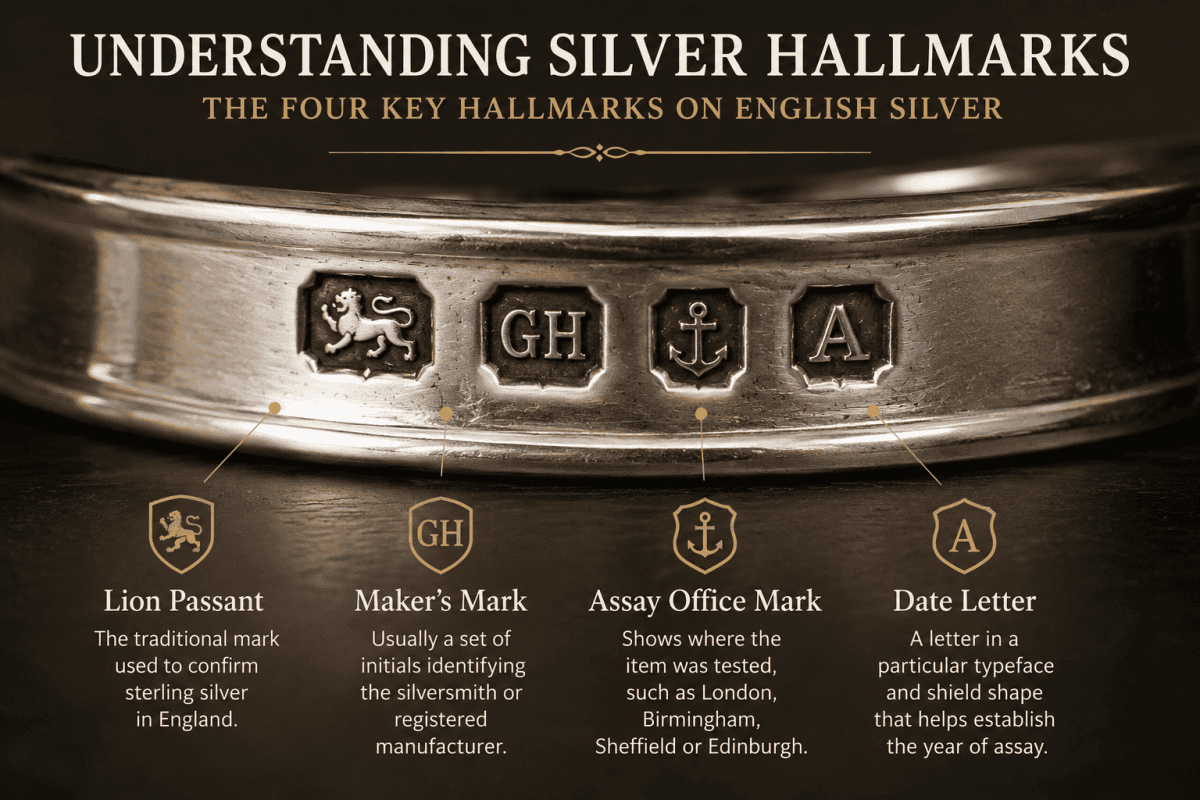
On British sterling silver, you may find a maker’s mark alongside the lion passant, an assay office symbol and a date letter. Depending on the age of the piece, there may also be a duty mark showing the reigning monarch’s head. These marks can be tiny, worn or partly hidden, so inspect the underside, rim, handle, base and inside of lids carefully.
Common British Silver Hallmarks
Lion Passant
The traditional mark used to confirm sterling silver in England.
Maker’s Mark
Usually a set of initials identifying the silversmith or registered manufacturer.
Assay Office Mark
Shows where the item was tested, such as London, Birmingham, Sheffield or Edinburgh.
Date Letter
A letter in a particular typeface and shield shape that helps establish the year of assay.
Pewter follows a much less regulated marking tradition. Older pieces may carry a maker’s touch mark, initials, town marks, ownership marks or decorative symbols. Modern examples may simply be stamped “Pewter” or carry a manufacturer’s name.
However, the absence of a full silver hallmark does not automatically prove that an item is pewter. Some foreign silver uses different standards, very small pieces may carry fewer marks, and older hallmarks can become heavily worn. Silver-plated items can also carry convincing-looking maker’s stamps without being solid silver.
“A hallmark is the strongest clue you can find, but experienced collectors still check the whole object rather than trusting one worn or unfamiliar stamp.”
Antiques & Homes Collector’s Advice
Use a magnifying glass, jeweller’s loupe or digital microscope when the marks appear faint. Photographing them with a mobile phone and enlarging the image can also reveal details that are difficult to see with the naked eye.
For official guidance on British silver marks, the Sheffield Assay Office provides useful reference information. Once you have checked the marks, move on to weight, colour and construction so that several clues support the same conclusion.
Useful Tools for Identifying Silver or Pewter
Good light and careful observation will identify many pieces, but magnification often makes the difference when marks are tiny, worn or hidden beneath years of tarnish. Hallmarks, touch marks, maker’s initials and surface wear can all become much easier to interpret when enlarged.
A digital microscope is particularly useful because it allows you to examine a mark on screen, take a photograph and compare the details with a trusted reference. This can help when the lettering is faint, the shield shape is unclear or several small symbols appear close together.
👉 View a digital microscope suitable for hallmark and antique inspection
A simple jeweller’s loupe can also work well for quick checks, while a mobile phone camera may reveal more than expected when the image is enlarged. Whichever method you use, examine more than the mark itself. Surface texture, casting seams, scratches, worn plating and the sharpness of engraved detail can all provide valuable clues.
Collector’s tip: Photograph each mark from several angles. Light falling across the surface often reveals worn letters and symbols more clearly than light shining directly onto them.
Pewter marks vary considerably and may include touch marks, initials, town symbols or the word “Pewter”. However, they rarely resemble a complete set of British silver hallmarks. Be cautious with unfamiliar marks, because silver plate, foreign silver and modern reproductions can all carry stamps that look convincing at first glance.
For official hallmark guidance, the Sheffield Assay Office provides a clear reference library and is a useful place to compare genuine British assay marks.
Weight Differences Give A Strong Clue to tell Pewter from Silver
Pewter and Silver can be made into similar objects, yet they often feel noticeably different when lifted. Silver is denser, so two solid pieces of roughly the same size will usually make the silver object feel heavier in the hand.
Pewter generally feels lighter, slightly warmer and softer. Antique tankards, dishes and candlesticks made from pewter can also have thicker walls because the metal was commonly cast rather than finely worked.
However, weight should never be used as the only test. A hollow silver candlestick may feel surprisingly light, while a thick cast pewter object can feel substantial. Weighted silver items may also contain pitch, plaster or another filling inside the base.
Three Things To Remember About Weight
Compare Similar Sizes
The lift test works best when comparing objects of broadly similar size and construction.
Check For Hollow Pieces
A hollow silver object may feel lighter than a thick, solid piece of pewter.
Look For Weighted Bases
Some silver candlesticks and ornaments contain added material that makes them feel much heavier.
With experience, the lift test becomes a useful first impression. Nevertheless, always support it by checking the marks, colour, construction and surface wear.
Colour And Shine Tell You Even More
Freshly polished silver has a bright, crisp, almost white shine. Pewter has a softer grey appearance and usually retains a muted finish even after careful polishing.
Ageing also affects the two metals differently. Silver reacts with compounds in the air and commonly develops dark grey or black tarnish, especially in recessed areas and around decorative detail. Pewter usually acquires a more even, cloudy grey patina rather than sharply defined black tarnish.
Be cautious when judging a heavily polished item. Repeated cleaning can make pewter appear brighter than expected, while neglected silver may look so dark and dull that it is easily mistaken for another metal.
You should also check whether the object is silver-plated rather than solid silver. Worn plating often exposes yellow brass, reddish copper or a darker base metal around rims, handles, hinges and raised decoration. That contrasting colour is a strong sign that the piece is plated rather than pewter.
Collector’s tip: Examine the least-polished areas first. The underside, inside of a handle and recessed decoration often preserve the metal’s natural colour and ageing pattern more clearly.
Use A Gentle Tap To Learn Even More
Sound can provide another clue, although it is less reliable than hallmarks or construction. Some solid silver objects produce a clearer, longer ringing tone when tapped gently, while pewter often gives a shorter and duller sound.
However, the result depends heavily on the object’s shape, thickness and construction. A hollow silver item, a piece with loose fittings or a weighted base may not ring clearly at all. Likewise, a large pewter vessel may resonate more than expected.
Never strike an antique with another hard object. Instead, hold it securely and use only a very light fingertip tap. Treat the sound as supporting evidence rather than proof, and stop immediately if the object feels fragile, cracked or loosely assembled.
Craftsmanship Reveals If The Material is Silver Or Pewter
Craftsmanship Can Reveal Silver Or Pewter
The way an object was made can provide another strong clue. Silversmiths often raise, hammer, spin or finely join silver, and these techniques can produce crisp edges, sharp engraving and delicate construction.
Pewter was more commonly cast in moulds. As a result, antique pewter often has softer outlines, rounded decoration and heavier seams. However, craftsmanship varies greatly, so use these signs alongside the hallmarks, weight and colour rather than relying on them alone.
What The Construction May Tell You
Crisp Engraving
Fine, sharply cut engraving often appears on silver, although high-quality pewter can also carry good detail.
Rounded Relief
Softer, rounded moulded decoration frequently suggests cast pewter.
Fine Joints
Small, carefully finished joints often point towards silver or silver plate.
Thicker Seams
Visible mould lines and heavier seams are more commonly associated with cast pewter.
Study the underside and inside of the object as carefully as the decorative surface. Seams, soldered joins, tool marks and casting lines often remain easier to see in areas that have received less polishing and wear.
Check Tarnish And Ageing Patterns
Silver reacts with sulphur compounds in the air and commonly develops dark grey or black tarnish. This often gathers in recessed decoration, around handles and beneath rims where regular polishing has not reached.
Pewter does not tarnish in quite the same way. Instead, it usually develops a softer and more even grey patina. Older pewter can have a smooth, velvety appearance that many collectors value and prefer not to polish away.
Ageing patterns provide useful evidence, but they are not infallible. Silver plate can tarnish like solid silver, while heavily cleaned pewter may appear brighter than expected. Always combine the surface appearance with the marks and construction.
Collector’s tip: Do not polish an unidentified antique aggressively. Original patina can provide important clues, and over-cleaning may reduce both its character and value.
Watch Out For Silver-Plated Metal
Sometimes an object is neither solid silver nor pewter. Silver-plated wares can look extremely convincing, especially when the plating remains intact and the surface has been freshly polished.
The clearest evidence often appears where repeated handling and cleaning have worn through the silver layer. Check rims, handles, feet, hinges, raised decoration and other high-contact areas for a different-coloured metal beneath.
Yellow tones may reveal brass, while reddish areas can indicate copper. Other plated objects may expose a dull grey base metal. Pewter is rarely covered with silver plating, so contrasting wear patches usually suggest silver plate rather than pewter.
Marks such as EPNS, EPBM, A1 or Silver Plate also indicate plating rather than sterling silver. These marks can be small, so inspect the base and underside carefully with magnification.
Quick Comparison Guide
Feature
Silver
Pewter
Weight
Usually heavier
Usually lighter
Shine
Bright, crisp and white
Soft, muted grey
Ageing
Dark grey or black tarnish
Smooth, even grey patina
Marks
Official hallmarks or silver-standard marks
Touch marks, maker’s initials or no marks
Sound
May produce a clearer ring
Usually gives a duller thud
Construction
Often raised, hammered, spun or finely joined
Often cast with softer detail and thicker seams
This quick comparison helps you decide whether an object is silver or pewter when examining antiques in real-life situations. For the most reliable result, use several clues together rather than depending on one test alone.
Collectors also sometimes use precision jewellery scales when comparing silver and pewter objects, since weight and density can provide useful clues during identification.
👉 See precision scales suitable for antique and silver collecting
A 30-Second Silver Or Pewter Identification Check
When you are examining an unfamiliar tankard, candlestick, dish or piece of tableware, work through the object in the same order each time. You will often gather enough evidence to form a sensible opinion within half a minute.
Six Quick Checks
1. Look Underneath
Check the base, rim, handle and inside of lids for hallmarks, touch marks or plating marks.
2. Lift It
Silver often feels denser, while pewter commonly feels warmer, softer and slightly lighter.
3. Study The Colour
Silver tends towards a brighter white shine, while pewter usually retains a softer grey appearance.
4. Check The Wear
Yellow, copper-coloured or dark patches may reveal worn silver plating rather than solid silver or pewter.
5. Inspect The Construction
Fine joints and crisp detail may suggest silver, while heavier seams and rounded casting often point towards pewter.
6. Combine The Evidence
Never rely on one clue alone. The safest identification comes from several signs supporting the same conclusion.
“The quickest identifications rarely come from a clever trick. They come from checking the same small details in a sensible order.”
Antiques & Homes Collector’s Advice
If the clues conflict, do not force a conclusion. Photograph the marks, compare them with an official reference and ask an experienced dealer or assay office for further guidance before cleaning, testing or selling the item.
