
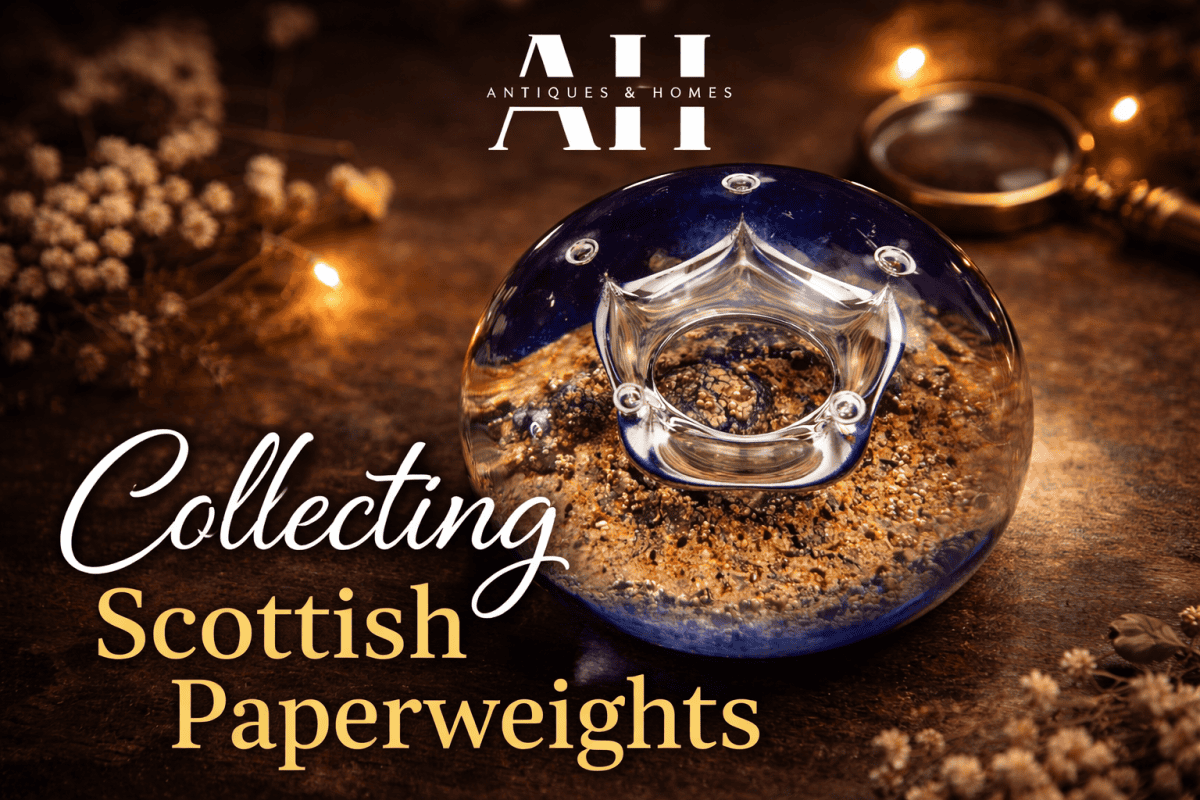
Collecting Scottish Paperweights remains one of the most approachable areas of antique and vintage collecting.
However, Scottish examples of these wonderful glass spheres stand out for their consistency, quality, and recognisable style.
Because Scotland developed a strong glassmaking tradition during the twentieth century, collectors often turn to Scottish makers when they want reliability without intimidation.
As a result, collecting Scottish paperweights suits beginners and experienced collectors alike.
This guide explains what matters, what to look for, and how to enjoy the process without overthinking it.
Quick Answer: What Should You Know About Collecting Scottish Paperweights?
Scottish paperweights are collected for their skilled glassmaking, distinctive colours and strong studio identities. Well-known names include Monart, Vasart, Strathearn, Caithness and Selkirk, although signatures, labels, base finishes and internal designs all vary. When collecting Scottish paperweights, examine the maker, condition, quality of the glass, originality of the base and overall balance of the design rather than relying on colour alone.
Why Scottish Paperweights Appeal to Collectors
Scottish paperweights have earned an international reputation for combining technical excellence with understated design. Rather than relying on excessive decoration, many Scottish makers preferred balance, clarity and precision, allowing the beauty of the glass itself to take centre stage.
This restrained approach gives many Scottish paperweights a timeless quality. A carefully placed millefiori arrangement, a perfectly controlled bubble design or a simple lampwork flower often creates a stronger visual impact than a more crowded composition. As a result, these paperweights feel just as comfortable in a contemporary home as they do in a traditional display cabinet.
Collectors also appreciate the individuality of Scotland’s glass studios. Although they shared a commitment to exceptional craftsmanship, each developed its own artistic identity. Some became renowned for intricate cane work, others for modern abstract designs or remarkable controlled bubble techniques. This variety allows collections to grow naturally without becoming repetitive.
Limited editions, commemorative issues and signed examples add another layer of interest. Many collectors enjoy researching the artists behind particular designs, while others focus on completing themed series or tracing the development of individual studios over several decades.
Fortunately, identifying Scottish paperweights becomes easier with experience. The more examples you handle, the more familiar the distinctive styles, colours and finishing techniques become. Nevertheless, a few practical checks provide an excellent starting point.
How to Identify Scottish Paperweights
Always begin by turning the paperweight over. Many Scottish studios engraved, acid-etched or labelled their work, and these marks often provide the quickest route to identification. Although labels sometimes disappear with age, an etched signature or factory mark frequently survives.
Next, consider the overall finish. Quality Scottish paperweights usually feel reassuringly solid in the hand, with a perfectly polished base and excellent optical clarity. Even relatively simple designs often demonstrate remarkable attention to detail.
Finally, study the internal decoration rather than the colour alone. Scottish glassmakers carefully planned the position of canes, flowers, bubbles and lampwork subjects to create balanced compositions. Nothing should appear accidental. When the internal elements feel harmonious and deliberate, you are often looking at the work of a highly skilled studio.
“Scottish paperweights rarely shout for attention. Their appeal lies in precise craftsmanship, balanced design and the quiet confidence that comes from glass made exceptionally well.”
— Antiques & Homes Collector’s Advice
Key Scottish Paperweight Makers to Know
Scottish paperweights did not emerge from a single factory or follow one recognisable style. Instead, several influential studios developed their own techniques, colour palettes and artistic identities. Learning to recognise these differences is one of the most enjoyable parts of collecting.
With experience, many collectors can often make an educated guess about the maker before turning the paperweight over to look for a signature or label. While no single feature provides absolute proof, understanding the character of each studio makes identification far easier.
Selkirk Glass
Founded in 1977 by former Caithness craftsmen, Selkirk Glass quickly established a reputation for producing elegant paperweights with exceptional clarity and meticulous finishing. The studio became particularly well known for controlled bubble designs, detailed lampwork subjects and beautifully executed millefiori canes.
Many Selkirk paperweights celebrate Scottish heritage, wildlife, royal occasions and commemorative events, making them attractive to both glass collectors and those interested in British history. Limited editions, date canes and signed bases add further appeal, while the consistently high standard of polishing and presentation reflects the studio’s commitment to quality.
When examining a Selkirk paperweight, look for crisp internal detail, balanced composition and a highly polished finish. Even relatively modern examples demonstrate the precision that helped establish the studio’s international reputation.
Caithness Glass
Caithness Glass remains one of Scotland’s most recognised names in studio glass. Established in the far north of Scotland during the 1960s, the company became famous for combining technical innovation with contemporary design.
Rather than relying solely on traditional millefiori patterns, Caithness often experimented with controlled bubbles, engraved decoration, abstract forms and striking colour combinations. This willingness to innovate gave many of its paperweights a distinctly modern appearance while maintaining exceptional standards of craftsmanship.
For new collectors, Caithness offers an excellent introduction to Scottish paperweights. Many attractive examples remain affordable, allowing collectors to appreciate high-quality studio glass before progressing towards scarcer or earlier pieces.
Many Caithness designs make imaginative use of controlled bubbles to create depth and movement within the glass. If you would like to understand how this fascinating technique works, our guide to controlled bubble paperweights explains how glassmakers deliberately trap and arrange bubbles during production.
Perthshire Paperweights
Perthshire Paperweights earned an outstanding reputation for intricate millefiori work and remarkable technical precision. Each paperweight often contains hundreds of carefully arranged canes, creating complex floral, geometric and concentric designs that reward close examination.
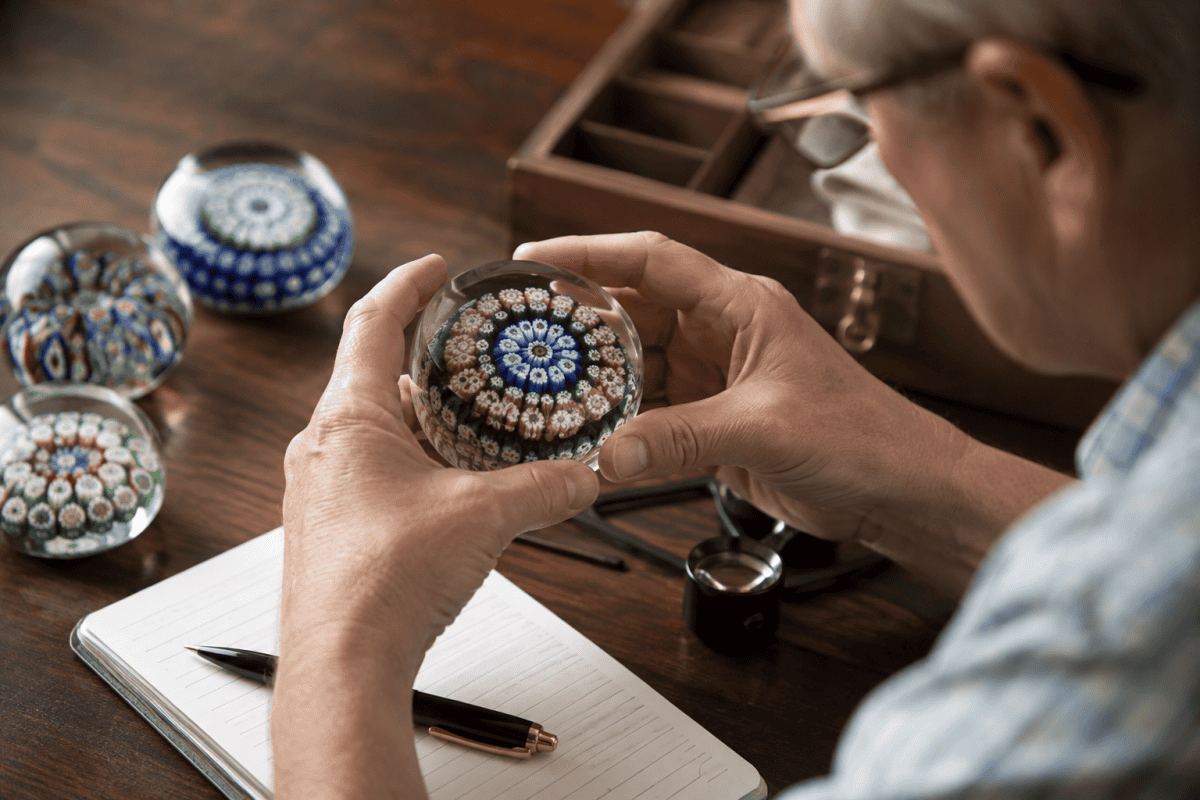
The quality of Perthshire craftsmanship becomes even more apparent under magnification. Fine spacing, exceptional symmetry and brilliant colour control demonstrate the extraordinary skill required to assemble these miniature works of art while the glass remained molten.
Collectors frequently regard Perthshire as one of the finest producers of traditional millefiori paperweights in Britain. Consequently, well-preserved examples with original labels or signatures often command strong interest within specialist collections.
Although each Scottish studio developed its own distinctive style, they shared a commitment to craftsmanship that continues to attract collectors around the world. Understanding these individual characteristics makes identifying Scottish paperweights both easier and considerably more rewarding.
Condition, Age and What Really Matters
One of the biggest surprises for new collectors is that the oldest paperweight is not always the most desirable. Experience quickly teaches that quality, condition and artistic merit usually matter far more than age alone.
A beautifully made Scottish paperweight from the late twentieth century may attract far more admiration than an earlier example with poor clarity or extensive damage. Collectors soon discover that exceptional craftsmanship never goes out of fashion.
Condition deserves careful attention, although perfection is uncommon. Most paperweights spent decades displayed on desks, shelves or windowsills before finding their way into modern collections. Consequently, light scratches to the base, gentle shelf wear and the occasional tiny polishing mark often form part of an object’s honest history rather than a cause for concern.
More serious defects deserve closer examination. Chips around the base, cracks running through the glass, bruises, heavy internal fractures or poorly executed repairs can affect both appearance and long-term stability. While some collectors will accept minor imperfections to acquire a particularly rare design, significant damage usually limits both desirability and future value.
Clarity also plays a surprisingly important role. The finest Scottish paperweights invite the eye deep into the glass, allowing every cane, bubble or lampwork flower to appear crisp and well defined. Cloudiness, extensive scratching or poor polishing can diminish that effect, even when the design itself remains attractive.
Perhaps the most valuable lesson is to judge each paperweight as a complete work rather than ticking boxes on a checklist. Ask yourself whether the design feels balanced, whether the colours work harmoniously and whether the craftsmanship still impresses you after several minutes of careful study. Those qualities often separate pieces that simply look attractive from those that collectors remember long after they have left the antiques fair.
Ultimately, successful collectors learn to buy with both their eyes and their judgement. Age adds interest, rarity adds excitement, but exceptional craftsmanship and genuine beauty are what keep people returning to Scottish paperweights year after year.
Starting or Growing a Scottish Paperweight Collection
Every established collection begins with a single paperweight. Some collectors inherit their first example, others discover one at an antiques fair or local auction, while many simply buy the piece that catches their eye. There is no single correct way to begin.
New collectors often benefit from narrowing their focus during the early stages. Choosing a single studio such as Caithness, Selkirk or Perthshire allows you to become familiar with that maker’s colours, signatures and design style before expanding into other areas of Scottish glass.
As confidence grows, many collections naturally become more varied. Commemorative issues, limited editions, controlled bubble designs, millefiori weights and lampwork examples each add something different without losing the overall Scottish identity of the collection. Rather than chasing quantity, experienced collectors usually prefer fewer pieces chosen for quality and individual character.
Presentation deserves almost as much thought as collecting. Scottish paperweights come alive when light passes through the glass, revealing colours, canes and carefully controlled internal decoration. A thoughtfully positioned display cabinet, shelf or windowsill often transforms pieces that looked quite ordinary under poor lighting.
Most importantly, allow your collection to develop naturally. The most memorable collections rarely follow a strict plan. Instead, they reflect the collector’s own interests, discoveries and appreciation of craftsmanship built over many years.
Three Ways to Build a Scottish Paperweight Collection
There is no single ‘correct’ way to collect Scottish paperweights. Some collectors enjoy researching individual studios, while others simply buy the designs they love. These three approaches remain among the most popular and often overlap as collections grow.
Collect by Maker
Concentrate on one studio such as Caithness, Selkirk or Perthshire. Learning one maker’s colours, signatures and design style builds confidence before expanding into other Scottish glass houses.
Collect by Design
Focus on a particular style such as millefiori, controlled bubbles, lampwork flowers or commemorative editions. This approach creates a visually varied collection while still following a clear theme.
Collect for Display
Some collectors simply choose paperweights that look beautiful together. Mixing colours, shapes and sizes creates an attractive display where craftsmanship and visual impact matter more than completing a particular series.
Where to Find Scottish Paperweights Today
Part of the pleasure of collecting Scottish paperweights lies in never quite knowing where the next interesting example will appear. Unlike modern retail products, each paperweight has already lived a life before reaching today’s collector. Some emerge from long-established collections, others appear quietly at country auctions, while many sit unnoticed in antique centres waiting for someone to recognise their quality.
Specialist glass dealers remain one of the safest places to buy because they usually describe condition, maker and provenance carefully. Reputable auction houses also offer excellent opportunities, particularly if you enjoy researching pieces before bidding. Antique fairs, however, provide something online shopping never can: the chance to handle a paperweight, judge its clarity under natural light and compare it directly with other examples.
When buying online, always study photographs carefully and read the description in full. Good sellers usually show the base, mention any signatures or labels, describe chips or scratches honestly and photograph the paperweight from several angles. Clear condition reporting often tells you as much about the seller as it does about the glass itself. View our latest selection of Paperweights in the Antiques And Homes Etsy Store there is always a good selection of Scottish examples available.
If you enjoy browsing in person, Scottish paperweights regularly appear in independent antique shops and centres throughout the UK. Because stock changes constantly, visiting the same dealer more than once often proves worthwhile. Many experienced collectors will tell you that their favourite paperweight was not the most expensive one they bought, but the one they almost walked past before taking a second look.
Here at Antiques & Homes in Blofield, Norfolk, paperweights remain one of our favourite areas of collecting. We regularly stock Scottish studio glass alongside other interesting decorative glass, and because every piece is individually selected, our range changes throughout the year. Whether you visit the shop or browse our latest articles online, our aim is always the same: to help collectors discover well-made pieces with genuine character rather than simply filling a shelf.
Learning More About Scottish Glass
For deeper background on Scottish glassmaking and studio history, the Scottish Glass Society provides well-researched context and educational resources.
As a result, collectors can place individual paperweights within a wider historical framework.
Frequently Asked Questions About Collecting Scottish Paperweights
Which Scottish paperweight makers are the most collectable?
How do I identify a Scottish paperweight?
Are Scottish paperweights a good investment?
What condition problems should I look for?
Can modern Scottish paperweights still be collectable?
Where is the best place to buy Scottish paperweights?
Final Thoughts on Collecting Scottish Paperweights
Collecting Scottish paperweights remains enjoyable because it rewards looking rather than rushing.
Although trends change, craftsmanship and clarity endure.
By focusing on makers, condition, and design rather than hype, collectors build collections that feel personal and lasting.
Therefore, whether you buy one piece or many, Scottish paperweights continue to offer quiet satisfaction.
Affiliate Disclosure: Antiques & Homes participates in the Amazon Associates Programme. If you purchase through links on this page, we may earn a small commission at no extra cost to you. Every product we recommend is chosen because we believe it offers genuine value to collectors, helping you learn more about Scottish paperweights and make better-informed collecting decisions.
