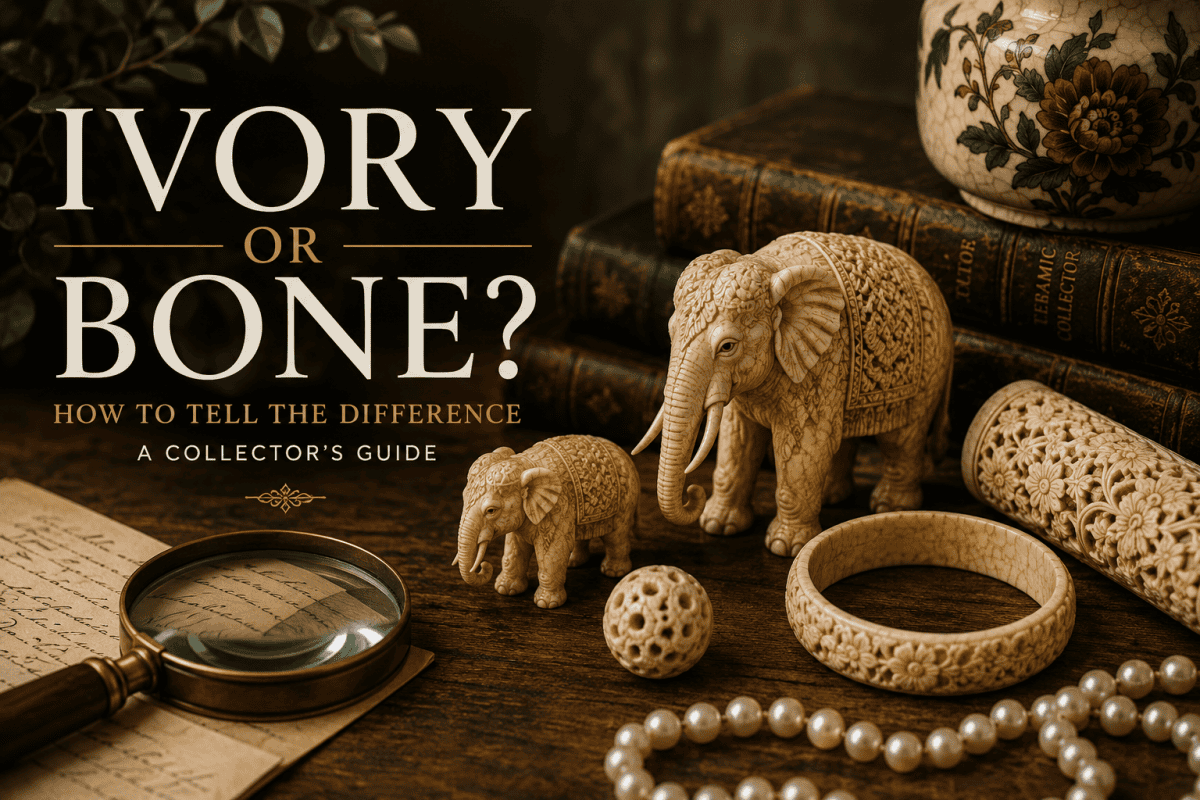
Collectors often face one question when examining older carvings, handles, ornaments, and small decorative items. Is it ivory or bone? The two materials can look similar at first glance, so new collectors sometimes guess incorrectly or feel unsure about what they see. However, you can learn the difference once you understand a few reliable visual clues.
This guide explains everything you need to know in clear steps. You will learn how each material forms, how it ages, and how different textures help you make confident identifications. You will also learn about the legal rules surrounding ivory in the UK, since those rules now shape how dealers and collectors buy, sell, and display antique items.
Understanding whether you have ivory or bone helps you value your pieces accurately, and it helps you stay within the law. So let us explore the details properly.
Quick Answer
The quickest way to tell the difference between ivory and bone is to examine the surface closely. Genuine ivory often displays fine cross-hatched Schreger lines or a smooth grain depending on the species, while bone usually shows tiny pores or dark pinprick holes where blood vessels once ran. Colour, weight, texture and craftsmanship can also provide valuable clues, although identifying antique materials with complete certainty sometimes requires expert examination.
What Ivory Is and Why It Looks Unique
Ivory comes from the teeth or tusks of certain animals. Most antique items use elephant ivory, although walrus, mammoth, narwhal, and hippopotamus ivory also exist. Each type has a slightly different appearance, yet they all share one important feature. Every piece of ivory grows in layers of dentine, and these layers produce natural grain lines within the material.
These internal lines create the distinctive patterns that collectors learn to recognise. When you look closely, you often see cross hatching or wavy lines that sit beneath a smooth surface. These lines grow in a natural biological pattern, so they never look artificial or perfectly straight.
Because ivory is made of dentine rather than bone, it also feels different. It feels smooth, warm to the touch, and slightly soft compared with harder materials. Even carved areas keep that soft sheen, so many people recognise ivory by touch as well as by sight.
Using Magnification to Check Small Details
Good light and careful handling make a real difference when you compare ivory and bone. However, some clues sit below normal eyesight, especially on small carvings, handles, sewing tools, jewellery, and decorative objects.
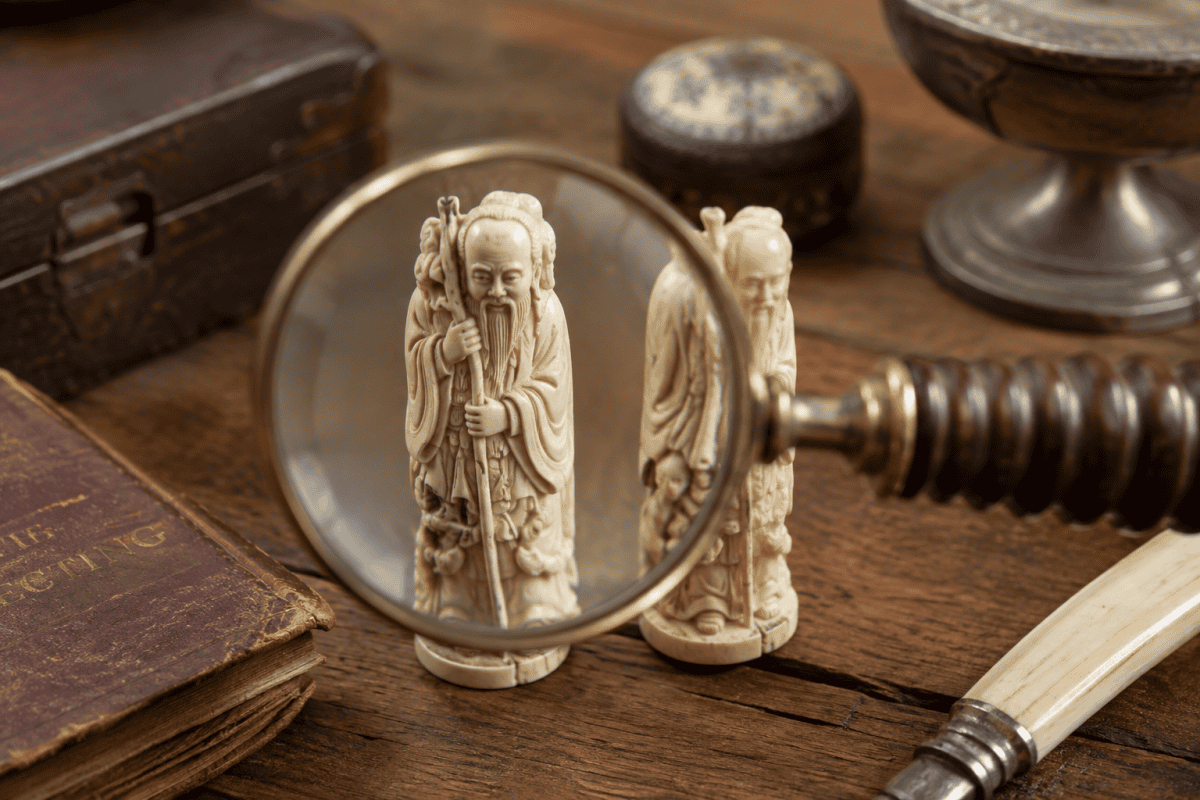
A simple 10x jeweller’s loupe with light can help you look more closely at pores, grain lines, surface texture, tool marks, and possible repairs. Bone often shows tiny pores or darker speckling, while ivory may reveal finer grain and, in some cases, Schreger lines.
It will not give you a guaranteed answer on its own. Even so, it gives you a much better view before you decide whether an item needs further research, expert advice, or formal testing.
What Bone Is and How It Differs from Ivory
Bone comes from the skeleton of animals rather than from tusks or teeth. Because bone formed with blood vessels running through it, it naturally contains pores. These small pits appear across the surface in regular patterns. Ivory never shows these pores, so you can often identify bone quickly once you know what to look for.
In addition, bone often has darker lines that mark where the bone grew or where it was cut. These lines appear in long strips rather than in the curved or cross hatched patterns seen in ivory.
Bone usually feels harder and cooler than ivory. It often has a more matte finish, and it sometimes shows small surface grooves from the working process. Antique makers frequently used bone for everyday objects such as buttons, tools, fan sticks, sewing sets, and small decorative carvings.
How to Tell Ivory or Bone Apart by Eye
“Every experienced collector learns to look beyond the carving and study the material itself.”
Antiques & Homes Collector’s Advice
Once you understand the main differences, you can begin examining items properly. Here are the most reliable visual clues.
Look for Schreger Lines in Ivory
Ivory often shows faint lines known as Schreger lines. These lines form a cross hatched pattern that looks almost like delicate veining. When the item is elephant ivory, these lines meet at angles that help experts identify the species. You may need a magnifying glass to see them clearly, yet you will notice the pattern once you learn what it looks like.
Check for Pores in Bone
Bone displays pores that appear as tiny dark dots. They usually sit in straight or slightly curved rows, and they always appear somewhere on the surface unless the piece was heavily polished or painted. Because pores never appear in ivory, this simple check solves many identification puzzles.
Examine the Colour and Ageing Pattern
Ivory often yellows with age in a warm and even way. Bone sometimes yellows too, yet bone often shows patchier colour changes. Ivory grows warmer and deeper in tone, while bone sometimes shows brown spots or darker ageing marks.
Study the Carving Detail
Ivory holds sharp detail with smooth edges. Bone can hold detail too, although the pores sometimes interrupt fine carving and create tiny rough areas. When a carved figure or handle shows a glossy, soft finish with flowing lines, it may be ivory. If it looks slightly grainy or uneven in places, it may be bone.
Look at the Shape of the Piece
Many ivory items come from larger sections of tusk. Because of that, some pieces show a gentle curve that stays consistent along the length. Bone pieces often come from flatter or narrower parts of the skeleton, so they usually have straighter sides and a less regular curvature.
Simple Tests You Can Perform at Home For Ivory Or Bone
You can use a few easy and safe checks to help you tell ivory or bone apart. These checks will not damage your item and still give you useful clues.
The Light Test
Hold the item near a bright lamp or window. Ivory sometimes shows a translucent, creamy glow around thinner areas. Bone usually blocks light more strongly and looks more opaque.
The Pin Test for Ivory or bone (Non-invasive)
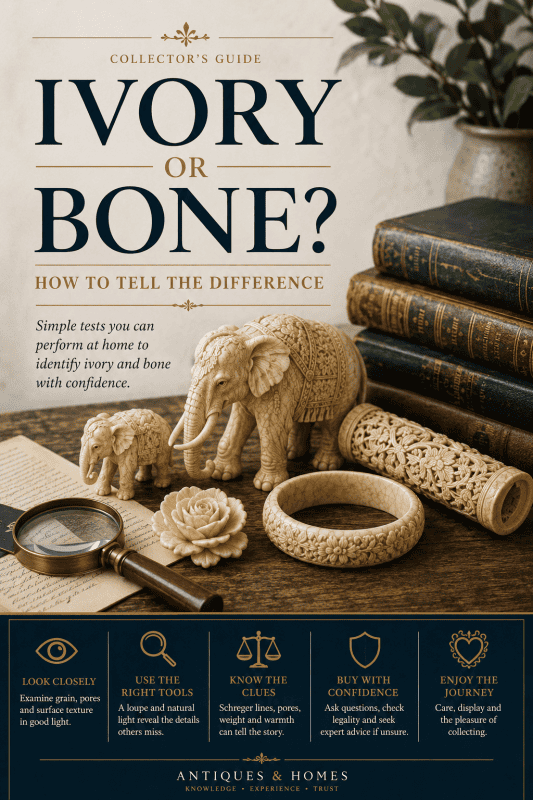
Just observe. Ivory shows natural patterning, bone shows pores. Never scratch, poke, or heat test your item. These old methods often cause permanent damage and should not be used.
The Join Test
Many bone objects were made from several pieces joined together. You may see seams where individual plates were glued or pinned. Ivory objects often come from a single piece of material, especially small carvings.
“The difference between ivory and bone is rarely one clue—it is the weight of several small clues considered together.”
Antiques & Homes Collector’s Advice
Legal Considerations When Dealing With Ivory
Understanding whether you have ivory or bone matters for more than identification alone. In the UK, the Ivory Act places strict rules on the sale of ivory. The Act bans most ivory sales unless an item meets a specific exemption category. Exemptions include rare museum grade pieces, portrait miniatures, pre 1947 items with less than ten percent ivory by volume, and musical instruments with less than twenty percent ivory.
You can read the official guidance on the Ivory ban 2022 directly on the UK Government website.
Dealers must apply for certification before a sale, and the certificate must accompany the item. Collectors should keep these documents safe. If you buy an antique from a reputable dealer, you can always ask to see the registration number.
Understanding the law helps you avoid problems, and it helps you make informed decisions when choosing between ivory or bone items.
Why This Knowledge Matters for Collectors
Once you know how to tell ivory or bone apart, you gain confidence when handling antiques. You also protect yourself from mistakes, since many older items were labelled incorrectly decades ago. Knowledge improves your collecting experience because you buy the right items for the right reasons.
Furthermore, many collectors now prefer bone or other legal materials because they want the appearance of historic craftsmanship without the restrictions surrounding ivory. Knowing how to distinguish the two materials helps you choose what suits your collection ethically and legally.
When to Seek Professional Help
Even with practice, some items remain difficult to identify. Carved figurines, religious objects, and mixed material pieces can confuse new collectors. When in doubt, you can seek help from a professional dealer, a museum expert, or an accredited appraiser. Specialists understand the subtleties, and they often recognise rare ivory types that need careful documentation.
As you gain experience, you will learn to trust your eye, yet a second opinion always helps when the item holds significant value.
Ivory or Bone FAQs
How can I tell the difference between ivory and bone?
The quickest way is to examine the surface closely. Ivory often displays fine cross-hatched Schreger lines or a smooth grain, while bone usually contains tiny pores or pinprick holes where blood vessels once passed through. Considering several identifying features together always produces the most reliable result.
Are antique ivory items legal to own?
In many countries, including the UK, it is legal to own antique ivory. However, selling, importing and exporting ivory may be subject to strict legislation. Always check the latest regulations before buying or selling any ivory item.
Does bone become more valuable with age?
Not necessarily. The value of bone carvings depends on craftsmanship, rarity, condition, maker and historical significance rather than age alone. Exceptional carved bone pieces can be highly collectable in their own right.
Can photographs reliably identify ivory?
Photographs can provide useful clues, but they rarely tell the whole story. Lighting, image quality and viewing angle can hide important features. Whenever possible, examine the object in person using magnification and good natural light.
What are Schreger lines?
Schreger lines are the distinctive cross-hatched patterns found in elephant ivory when viewed on a cut surface. They are one of the most useful identification features for collectors, although they are not visible on every object.
Should I buy an item if I’m unsure whether it is ivory or bone?
If you are uncertain, ask questions before purchasing. Reputable dealers should be able to explain why they believe an object is ivory or bone and provide any supporting documentation where appropriate. When in doubt, seek expert advice before committing to a purchase.
Summary: The Easy Way to Tell Ivory or Bone
Learning to tell ivory or bone apart takes patience, yet it becomes easier once you know what to look for. Ivory has Schreger lines, soft sheen, warm tone, and flowing detail. Bone has pores, straight grain patterns, and a firmer, more matte finish. Both materials appear in antique objects, and both carry their own history and charm.
Take your time, study each clue, and enjoy the process. Identifying materials is one of the most rewarding parts of antique collecting, and it helps you appreciate the story behind every piece you bring home.
If you enjoy learning about antique materials, you can explore more articles and posts in our Collecting section
Disclosure: As an Amazon Associate, Antiques & Homes may earn a small commission from qualifying purchases. This comes at no extra cost to you and helps support our independent collector guides.
